

Here’s something nobody tells you before you retire: freedom without rhythm can feel surprisingly hollow.
You’ve worked toward this chapter for decades, and then the alarm doesn’t go off… and the day stretches out in a way that feels more unnerving than liberating.
You’re not alone in that feeling.
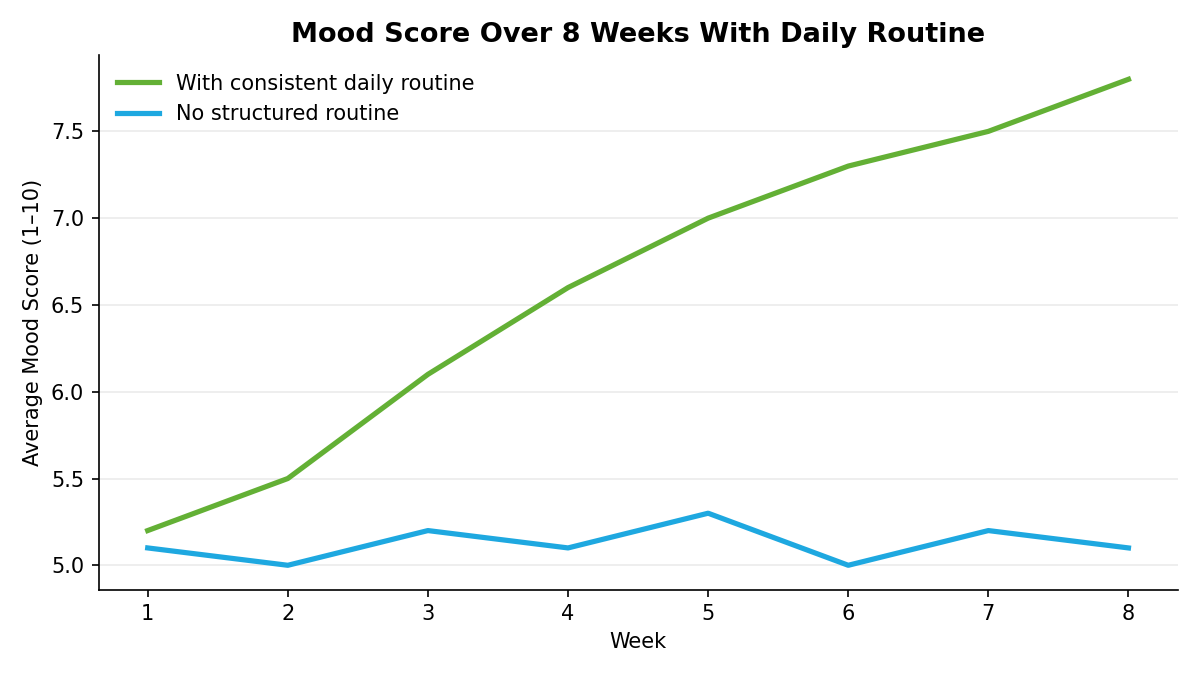
Studies consistently show that the transition into retirement is one of life’s biggest identity shifts, and a lack of daily structure is one of the top predictors of dissatisfaction in the early years.
The good news? You don’t need a packed calendar or a rigid schedule that swaps one treadmill for another. A handful of well-chosen daily habits, stacked in the right order at the right time, can genuinely rewire how good your days feel.
This isn’t about squeezing productivity out of your retirement. It’s about designing days that leave you energized, connected, and genuinely glad to be here.
The key? You don’t have to overhaul your life overnight. Start with one section of this routine, let it stick, and build from there.
Article Highlights
- Consistent wake time: Anchoring your day to a fixed rise time regulates cortisol and sets a positive mood baseline.
- 30-minute morning walk: Research consistently links 30 minutes of moderate daily movement to measurably lower depression risk in older adults.
- 2 scheduled social touchpoints: Retirees with at least 2 planned social interactions per day report significantly higher life satisfaction than those with unplanned contact.
- 7–8 hours of sleep for most retirees: Per CDC guidance, adults 65 and older need 7–8 hours nightly (adults 61–64 need 7–9 hours). Hitting that window is one of the highest-leverage habits in this entire routine.
- One meaningful goal per week: Setting even one small weekly goal — a project, a volunteer shift, a skill — activates the brain’s reward system and sustains a sense of forward momentum.
The Science Behind Daily Routines and Retirement Happiness
Why Your Brain Craves Structure — Even After You’ve Earned the Freedom
Your brain doesn’t stop needing rhythm just because you’ve left the office.
Neuroscientists describe the basal ganglia — the part of your brain that loves habits — as a comfort-seeking system. When it knows what’s coming next, it conserves mental energy and releases a small, steady drip of dopamine, your brain’s “this feels right” chemical.
Without that rhythm, the brain spends more energy in a low-grade alert state. That’s not anxiety exactly. It’s more like a hum of restlessness that’s hard to name but easy to feel.
A consistent daily routine quiets that hum. And in retirement, when external structure is no longer handed to you, building your own becomes one of the most powerful things you can do for your mood.
What the Research Actually Says About Retirees and Daily Habits
The broad picture from behavioral research is clear: retirees who maintain structured daily habits — regular sleep, planned social time, purposeful activity — consistently report higher life satisfaction than those who wing it day to day.
The mechanism isn’t mysterious.
Predictability lowers cortisol (your stress hormone). Lower cortisol creates more room for serotonin, the slow, steady mood stabilizer that makes ordinary days feel genuinely good.
This isn’t about becoming a robot. It’s about giving your nervous system enough consistency that it can relax into enjoyment, rather than scanning for what comes next.
Can a Routine Actually Prevent Depression in Retirement?
Depression risk does rise in the first two years of retirement for some people, particularly those whose identity was tightly tied to their career. But routine is one of the most evidence-supported protective factors.
Behavioral activation — the clinical term for “do things that matter, even when motivation is low” — is a cornerstone of depression treatment for good reason. When you schedule pleasant, purposeful activities and follow through, you create a feedback loop: action drives mood, not the other way around.
That’s the entire logic behind this routine. You’re not waiting to feel motivated. You’re building a structure that generates motivation as a byproduct.
The Complete Daily Routine for Maximum Retirement Happiness
Your Ready-to-Use Daily Schedule
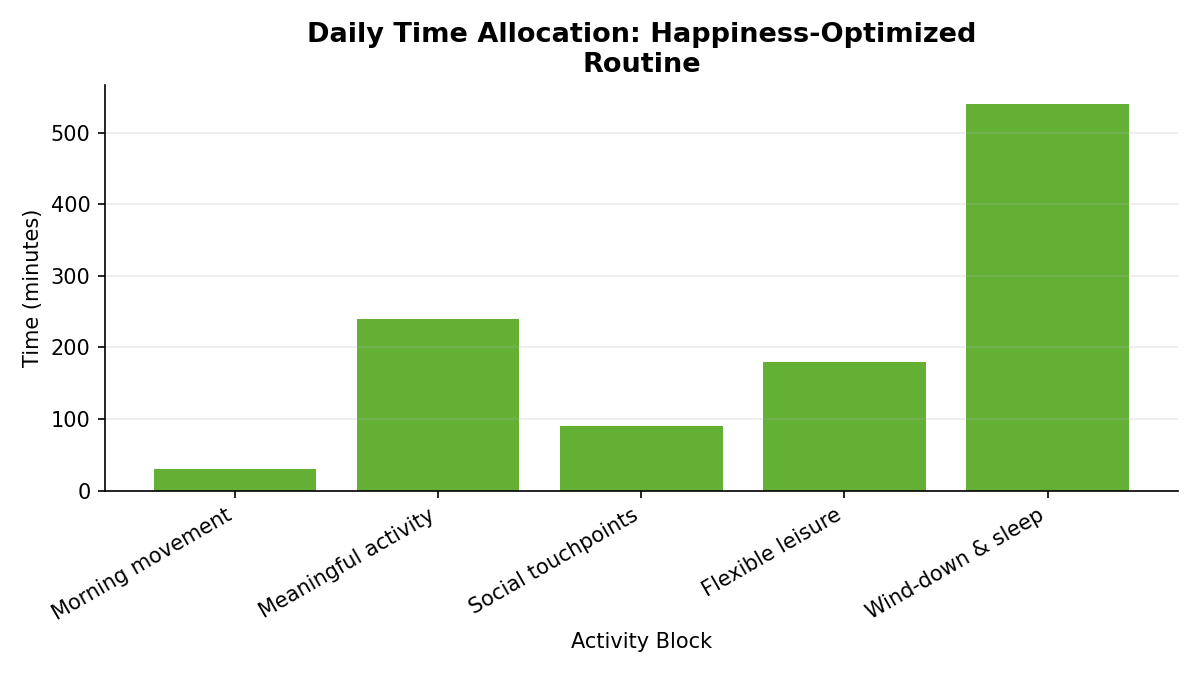
Think of this as a starting template, not a commandment. The goal is to give your days a shape you can feel. One that leaves room for spontaneity inside a stable frame.
For more on building a retirement life that goes beyond the routine, see these 7 strategies for a fulfilling retirement life.
Here’s the full daily sequence:
| Time | Activity | Duration |
|---|---|---|
| 6:30 AM | Wake at a consistent time — orient, hydrate, no phone | 10 min |
| 7:00 AM | Morning movement: walk, stretch, or light exercise | 30 min |
| 7:30 AM | Nourishing breakfast + one small intention for the day | 20 min |
| 8:00 AM–12:00 PM | Primary meaningful activity: project, hobby, volunteering, learning | 4 hrs |
| 12:00 PM | Lunch + first social touchpoint: call a friend, lunch with a neighbor | 45 min |
| 1:00–4:00 PM | Flexible time: errands, leisure reading, creative pursuit, rest if needed | 3 hrs |
| 4:00 PM | Second movement window: walk, garden, swim | 20–30 min |
| 5:30 PM | Second social touchpoint or family connection | Open |
| 8:30 PM | Wind-down: dim lights, no screens, light reading or calm activity | 60 min |
| 9:30 PM | In bed, aiming for 7–8 hours (65+) or 7–9 hours (ages 61–64) | 7–9 hrs |
Why This Sequence Works
The order here is intentional. Movement comes early because morning exercise produces a cortisol spike that’s actually helpful. It sharpens focus and sets an energized tone before that cortisol naturally tapers through the day.
Meaningful activity is front-loaded in the morning because cognitive energy and willpower are typically highest then. Social contact is placed at midday and late afternoon, natural transition points, so it acts as a mood “top-up” rather than something you have to work up to.
The evening sequence is deliberately low-stimulus. That taper matters enormously for sleep quality, which in turn feeds everything else.
How Long Before You Feel the Difference?
Most people notice a shift in their sense of groundedness within two weeks of consistent routine.
The deeper mood lift typically builds over four to eight weeks as the habits become automatic and the neurochemical effects compound.
Give it three weeks before you judge it. The first week often feels a little mechanical. That’s normal. Push through it.
Morning: Setting the Tone for Your Day
The Consistent Wake Time: Your Most Powerful Free Tool
You don’t need a 5 AM alarm. You need a consistent alarm — whatever time suits you — that you hit seven days a week, including weekends.
Circadian rhythm is the biological clock that regulates cortisol, melatonin, appetite, and mood. When you keep a steady wake time, that clock runs cleanly. When you sleep in on weekends or nap past noon, it drifts — and a drifting clock produces what researchers call “social jetlag,” which feels like low-grade fatigue and irritability without an obvious cause.
Set one consistent wake time and protect it. That single habit alone will improve your mood more than most supplements ever will.
Morning Movement: The 30-Minute Habit With Outsized Returns
Thirty minutes of moderate movement in the morning is consistently one of the highest-return habits in the happiness literature. Walking is perfect. It’s low-impact, requires no equipment, and gets you outside, which adds the bonus of natural light exposure that further regulates your circadian rhythm.
Not a walker? Gardening, a gentle yoga session, or a swim all count.
The goal is to elevate your heart rate modestly and move your body before you sit down to do anything else. For a deeper look at staying physically well in retirement, thriving physically in retirement covers the full picture.
The CDC recommends 150 minutes of moderate aerobic activity per week for older adults. That’s roughly 30 minutes, five days a week. This routine gets you there.
The Daily Intention: Small but Mighty
Before you open email, news, or social media, take two minutes over breakfast to name one thing you want to accomplish or experience today. Not a to-do list. One thing.
This isn’t self-help fluff.
It’s a practical application of implementation intention research, which shows that people who pre-commit to a specific action are significantly more likely to follow through. It also gives your dopamine system something to anticipate, which lifts baseline mood before the day has even started.
Midday Habits That Sustain Mental Wellbeing
Meaningful Activity: The Secret Ingredient Most Retirees Miss
The happiest retirees aren’t the ones doing the least. They’re the ones doing things that feel worth doing.
That’s the distinction between leisure and purposeful activity. And your brain responds to that distinction with real chemical differences.
Your morning block (8 AM–noon in the template) is prime time for whatever you find most meaningful: a creative project, a volunteer role, a part-time consulting gig, learning something new. It doesn’t have to be productive in a traditional sense. It has to matter to you.
Not sure what that looks like yet? Our guide to 7 best hobbies for retirees to stay social has practical starting points.
Scheduled Social Contact: The Longevity Habit You Can’t Outsource
Social connection is one of the most replicated predictors of both happiness and longevity in retirement. But here’s what often goes wrong: retirees wait for social contact to happen organically. It rarely does at the same rate it did at work.
The fix is simple: schedule it. Put a lunch date, a phone call, a walking group, or a neighbor visit on your calendar the same way you’d schedule a doctor’s appointment. Two planned touchpoints per day — one around midday, one in late afternoon or evening — is a target that dramatically changes how connected you feel.
For practical ways to expand your social circle, build social connections in retirement is worth bookmarking.
The Afternoon Recharge: Rest Without Guilt
Your 1–4 PM window in the template is deliberately flexible. If you want to nap, nap. But keep it to 20–30 minutes and aim to finish before 3 PM. A longer or later nap starts to compete with nighttime sleep quality.
If rest isn’t what your body needs, use this window for lighter pursuits: reading, a slow errand, a creative project with lower stakes than your morning work. Think of this block as a “float zone”. It buffers the intensity of your morning and sets you up for an energized late afternoon.
Evening Practices That Improve Sleep and Mood
The Wind-Down Window: Why 8:30 PM Is a Magic Line
Per the CDC’s sleep guidance, adults aged 61–64 need 7–9 hours of sleep per night, while adults 65 and older need 7–8 hours. Most people know they should be hitting those targets. What fewer people realize is that the 90 minutes before bed matter as much as the hours in bed.
Blue light from screens suppresses melatonin production, delaying the sleepiness signal by up to two hours. Emotional stimulation — news, arguments, action-heavy TV — keeps your nervous system in a mild alert state that quietly chews into sleep quality even when you fall asleep at a normal time.
At 8:30 PM, dim the lights, put down the phone, and shift to something calm: a book, light music, gentle stretching, or a conversation that isn’t about problems. That 90-minute ramp-down isn’t optional if you want those restorative hours to actually do their job.
The Gratitude Moment: One Minute That Pays Dividends
Before you fall asleep, name three specific things from the day that were good. Not grand things… maybe it’s the coffee, the bird you noticed on your walk, the conversation that made you laugh.
Gratitude journaling research is among the most replicated in positive psychology.
It works by training your attention to notice positive events during the day (because you know you’ll be listing them later), which effectively shifts your default scanning mode from threat to reward.
You don’t need a journal. You can do this in your head. The consistency is what creates the effect.
Sleep as a Non-Negotiable Health Investment
Good sleep isn’t a passive activity. It’s when your brain consolidates memories, regulates emotion, and clears metabolic waste. Poor sleep in retirement is linked to increased irritability, reduced motivation, and a flattening of positive emotions.
If you’re consistently falling short of the recommended window despite a good wind-down routine, it’s worth talking to your doctor. Sleep disorders are common and very treatable. And fixing them can feel like giving yourself an entirely new retirement.
How to Customize Your Routine for Your Lifestyle
For the Active, Social Retiree
If you thrive on people and movement, lean your routine toward group activities: a morning walking club, a pickleball league, a volunteer team. Your meaningful activity block might be something inherently social — a committee, a class, a community garden.
The only adjustment to watch: introverted recovery time.
Even highly social people need some quiet mid-afternoon buffer so they don’t arrive at the evening depleted.
If you’re thinking about where to build this lifestyle (and location plays a role in how easily you can access community) our piece on the safest cities to retire in 2026 looks at walkability, social infrastructure, and more.
For the Quieter, More Introverted Retiree
Your version of social connection doesn’t have to look like anyone else’s. Depth over frequency works just as well as multiple casual contacts. One long, meaningful conversation can sustain mood as effectively as three brief ones.
For your meaningful activity block, lean into solo pursuits with visible progress: writing, woodworking, painting, learning a language. The key is that the activity has an arc — a sense of moving forward — rather than pure passive consumption.
A well-designed routine is also deeply personal to where you live and how your days are naturally shaped. Whether you’re planning to stay local or explore somewhere new, a stable daily rhythm travels with you.
The Bigger Picture: When Your Routine Feeds Your Finances Too
There’s a quiet connection between a purposeful daily routine and your financial picture that’s easy to overlook.
Retirees with structured, engaging days tend to spend more intentionally — more on experiences and less on impulse — which creates breathing room in the budget for the things that genuinely matter: travel, giving back, time with family.
A routine that keeps you energized and purposeful isn’t just good for your wellbeing. It’s also a form of financial self-care. The alternative of boredom-driven spending or health costs from a sedentary lifestyle, adds up quietly over a long retirement.
Common Mistakes Retirees Make With Their Routines
Mistake 1: Trying to Change Everything at Once
The most common routine mistake isn’t laziness — it’s overambition.
Someone reads a guide like this, commits to all nine habits simultaneously, hits a rough week, and abandons the whole thing.
Behavior change research is consistent on this point: one habit at a time, practiced until it’s automatic, produces better long-term outcomes than sweeping overhauls. Pick the single habit in this routine that sounds most doable and make it non-negotiable for three weeks. Then add the next one.
Mistake 2: Treating Weekends Differently
Retirement doesn’t have weekdays and weekends the way work did — but your biology still does.
Sleeping in significantly on Saturday and Sunday disrupts your circadian rhythm just enough to make the following morning groggy and unmotivated.
Keep your wake time within 30–45 minutes of your regular time on weekends. That single guard rail protects the sleep quality gains you’ve worked to build.
Mistake 3: Scheduling “Rest” But Not “Purpose”
Many retirees over-schedule downtime and under-schedule meaningful activity. Rest is essential. But a day built entirely around rest rarely feels restorative. It tends to feel empty.
Balance the ratio deliberately. For every two or three hours of leisure, aim for at least one block of something that uses your brain, your hands, or your relationships in a purposeful way. That balance is what separates a day that felt good from one that just passed.
Tracking Your Happiness: Measuring What Works
The Simple Mood Log That Takes 90 Seconds
You don’t need an app or a spreadsheet. A small notebook with three columns works beautifully: date, mood rating (1–10), and one-word descriptor (energized, flat, content, restless). Fill it in at the same time each evening.
After four weeks, patterns become visible. You’ll see which days reliably score higher. And when you look at what those days had in common (morning walk? social lunch? early bedtime?), you have real data to guide your routine adjustments.
Green Lights and Red Flags to Watch For
Green lights: Signs the routine is working: waking before the alarm, looking forward to your morning activity, feeling genuinely tired (not just bored) at bedtime, noticing more patience and humor during social interactions.
Red flags: Signs something needs adjusting: persistent morning dread, afternoon energy crashes that feel heavy rather than just quiet, increasing social withdrawal, difficulty falling asleep despite the wind-down routine.
Red flags aren’t failures — they’re feedback. Adjust one variable at a time (sleep timing, activity type, social frequency) and track the response.
When to Bring In Support
If your mood log shows consistently low scores over four or more weeks despite genuine routine effort, that’s worth a conversation with your doctor or a therapist who specializes in life transitions. Low mood in retirement is common and very treatable. And no daily routine, however well-designed, is a substitute for professional support when it’s genuinely needed.
The routine is a powerful foundation. But you deserve the full toolkit if you need it.
Building a Retirement You’re Glad You Lived
A retirement you genuinely love isn’t an accident…
It’s built, one day at a time, by the habits you choose to repeat.
The routine in this guide isn’t about discipline for its own sake. It’s about giving your brain the rhythm it needs to stop scanning and start savoring.
Start small. Pick one habit — the consistent wake time, the morning walk, the two scheduled social touchpoints — and make it yours for the next three weeks. Then add another. Watch your mood log. Adjust what isn’t working. Keep what is.
The days you design intentionally are the ones that stack into a retirement you’re glad you lived.
Take action now: choose one habit from today’s routine, put it on your calendar for the next 21 days, and check back with your mood log at the three-week mark. Your future self will thank you.
Frequently Asked Questions
What daily habits contribute most to happiness in retirement?
The habits with the strongest evidence behind them are consistent sleep and wake times, at least 30 minutes of daily movement, and two planned social interactions per day. Purposeful activity — something that uses your skills or creativity with a sense of forward progress — adds a layer of meaning that leisure alone doesn’t provide. Stacking these habits into a predictable daily sequence amplifies their individual effects.
Can a daily routine prevent depression in retirement?
A structured routine is one of the most evidence-supported protective factors against retirement depression, particularly through behavioral activation. Scheduling meaningful and pleasant activities rather than waiting for motivation to arrive on its own. It won’t replace professional treatment if depression is already present, but it’s a powerful preventive tool. If low mood persists for more than four weeks despite routine efforts, a conversation with a doctor or therapist is worth pursuing.
What time should retirees wake up for optimal happiness?
The specific hour matters less than the consistency. Waking at the same time every day, including weekends, is what regulates your circadian rhythm and produces the cortisol pattern that supports good mood and energy. A window between 6:00 and 7:30 AM works well for most people, as it aligns with natural light and leaves a full, energized day ahead. Staying within 30–45 minutes of that time on weekends protects the sleep quality gains you’ve built during the week.
How much exercise do retirees need for happiness?
The CDC recommends 150 minutes of moderate aerobic activity per week for older adults. Roughly 30 minutes, five days a week. That threshold is also the approximate point at which research shows meaningful mood benefits, including reduced depression risk and improved sleep quality. Walking counts fully toward that target and is one of the most accessible forms of movement available to retirees.
How many hours of sleep do retirees need?
It depends on your age bracket. Per CDC guidance, adults aged 61–64 should aim for 7–9 hours per night, while adults 65 and older need 7–8 hours. The upper limit does shift as you age, so if you’re 65 or older, consistently sleeping 9 hours isn’t necessarily the goal. What matters most is hitting your window consistently, going to bed and waking at the same time each day, and paying attention to how rested you actually feel.