

The fantasy is real: a sun-drenched terrace, a lower cost of living, and a life that feels like a permanent vacation.
And for many Americans, the reality lives up to it. Retiring overseas can stretch your savings, sharpen your sense of adventure, and give your retirement a genuine pulse.
But there’s a gap between the retirees who thrive abroad and the ones who quietly pack up and come home within two years.
That gap isn’t luck. It’s preparation.
Most mistakes aren’t dramatic. They’re quiet: a bank account closed too soon, a tax form never filed, a visa category that sounded fine until it wasn’t.
The good news? Every mistake on this list is fixable before you go.
In this article, you’ll learn 9 of the most common mistakes Americans make when retiring overseas, plus the concrete steps to sidestep each one.
Because your best chapter deserves the best foundation.
1) Underestimating the True Cost of Living
What’s being missed
Many retirees budget based on headline numbers from travel blogs. “$2,000 a month in Portugal!” Those figures rarely include international health insurance, annual flights home, shipping costs, local taxes, and first-year setup expenses.
Why it matters
Running short on cash in a foreign country is stressful in a way that’s hard to overstate. Currency swings (covered in mistake #5) can quietly shrink your purchasing power on top of a budget that was already too thin.
A 10–15% cost buffer built into your first-year projections can be the difference between a smooth landing and a scramble.
How to fix it
- Spend one to three months living in your target destination before committing.
- Track every expense with a spreadsheet or app.
- Ask local expat Facebook groups what people actually spend, not what relocation guides advertise.
Our roundup of The Top 5 International Cities to Retire in 2026 breaks down real cost comparisons by city.
2) Ignoring US Tax Obligations for Americans Abroad
What’s being missed
Here’s one that surprises almost everyone…
Per IRS rules, the US taxes its citizens on worldwide income regardless of where they live.
You must file a federal return every year your income exceeds the standard filing threshold. You may also need to file an FBAR (FinCEN Form 114) if foreign bank accounts exceed $10,000 at any point during the year.
Why it matters
Missing these filings can trigger penalties that dwarf any savings from a lower cost of living. The Foreign Earned Income Exclusion and Foreign Tax Credit can reduce your US tax bill significantly, but only if claimed correctly and on time.
How to fix it
- Hire a CPA who specializes in expat tax law before you move.
- Budget $300 to $800 per year for a qualified expat tax preparer: a bargain against potential penalties.
- The American Citizens Abroad Association maintains directories of qualified professionals.
3) Assuming Medicare Will Cover You Abroad
What’s being missed
Medicare does not cover you outside the United States in the vast majority of situations. This shocks retirees who spent decades paying into the system. You will need a separate international health insurance policy from day one of your move.
Why it matters
A single hospitalization abroad without coverage can cost tens of thousands of dollars out of pocket.
Healthcare quality also varies dramatically by destination: a private hospital in a major city in Costa Rica or Thailand may be excellent, while rural areas in any country can have significant gaps.
How to fix it
- Research providers such as Cigna Global, Aetna International, or BUPA Global at least six months before your move date.
- Some plans have waiting periods for pre-existing conditions, so start early.
- Ask local expat communities which private hospitals they actually use.
Our Healthy Hero’s Guide to Thriving in Retirement offers a framework for evaluating healthcare as part of your overall retirement wellness plan.
4) Claiming Social Security at the Wrong Time
What’s being missed
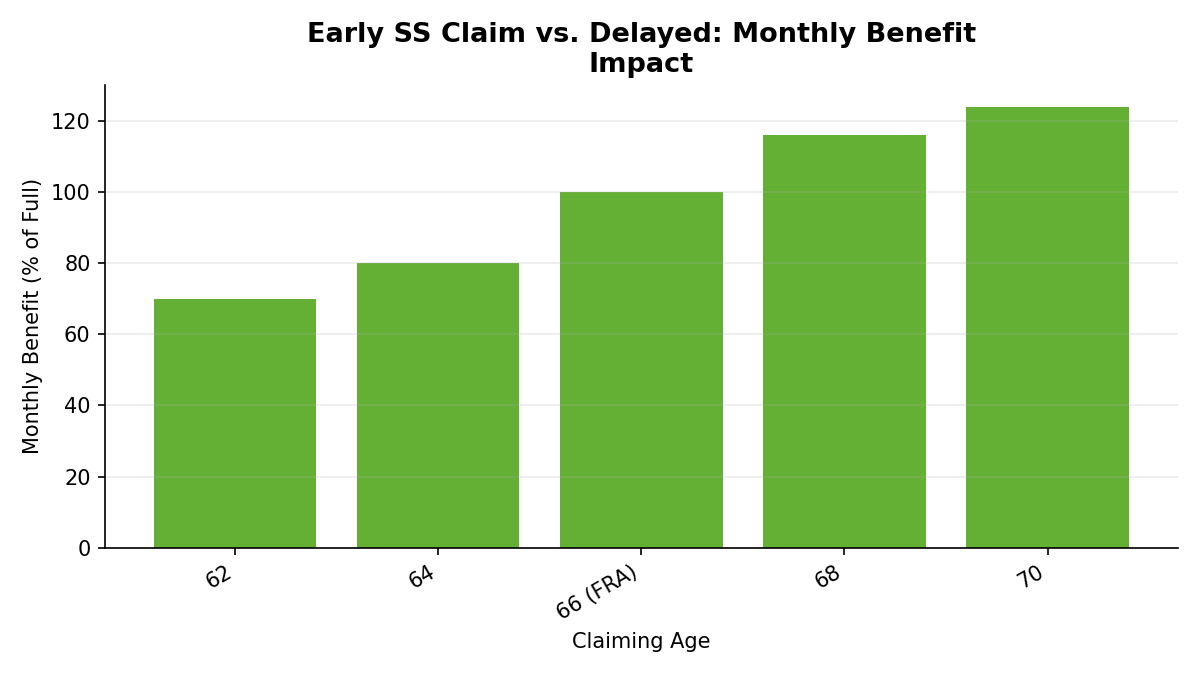
The excitement of moving abroad can push retirees to claim Social Security early just to lock in a predictable income stream. Claiming at 62 instead of waiting until your full retirement age (or 70) can permanently reduce your monthly benefit by up to 30%, per Social Security Administration rules.
Why it matters
That reduction follows you for life. In a country where expenses feel lower, the cut may seem painless at first. But a smaller check also means less cushion if local costs rise, if you return to the US, or if you live well into your 80s and 90s.
How to fix it
- Model different claiming ages using the SSA’s benefit estimator at ssa.gov.
- If a pension, rental income, or portfolio can cover your early years abroad, consider delaying your claim.
- Confirm your direct deposit routes to a US bank account you plan to keep (see mistake #7).
5) Ignoring Currency Risk and Exchange Rate Swings
What’s being missed
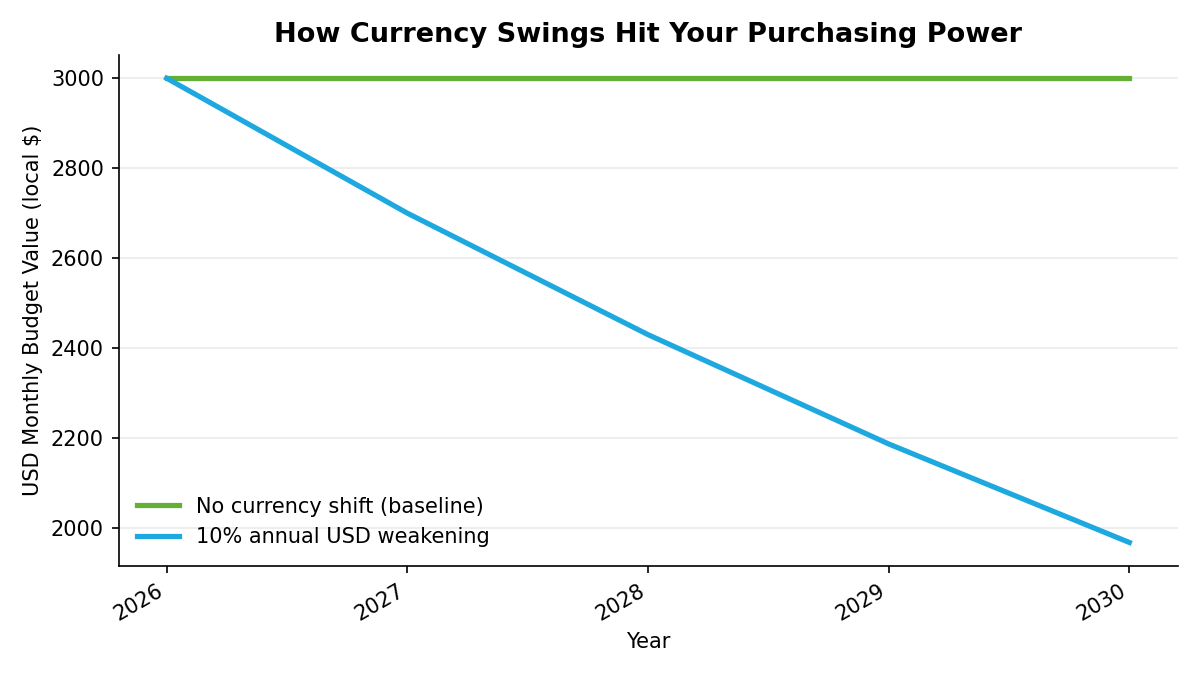
Your income arrives in US dollars. Your rent, groceries, and utilities are priced in euros, colones, baht, or pesos. When the dollar weakens against your local currency, your effective purchasing power drops, sometimes significantly.
Many retirees never model this risk at all.
Why it matters
A 10% shift in exchange rates can easily erase the cost-of-living advantage that made a destination attractive.
Currency markets move 5–15% in a single year with regularity. Retirees on a fixed income feel those swings more acutely than working professionals who can seek a raise.
How to fix it
- Keep a meaningful portion of liquid reserves in USD held in a US account.
- Use a multi-currency service like Wise to convert funds strategically rather than paying fees on every small transfer.
- Build a “worst-case rate” scenario into your budget, assuming local costs run 15% higher than today.
6) Buying Property Without Proper Legal Due Diligence
What’s being missed
Real estate in popular retirement destinations often looks like an incredible deal compared to US prices.
But property ownership laws vary enormously by country. Some nations restrict foreign ownership outright, others allow it only through specific legal structures, and title fraud is a documented problem in several popular markets.
Why it matters
Losing a property investment abroad is not just a financial hit. It can unravel your entire plan. Stories of retirees who purchased disputed land or worked through unreliable agents are more common than glossy expat magazines suggest.
How to fix it
- Hire an independent local real estate attorney, not the agent’s recommended lawyer, to review titles and ownership restrictions before signing anything.
- Rent for at least a year before buying in any new country.
- The cost of good legal counsel is trivial compared to the cost of a bad purchase.
7) Closing US Bank Accounts and Financial Ties Too Early
What’s being missed
Some retirees close their US bank accounts shortly after moving abroad to simplify.
This is one of the most disruptive mistakes on the list.
Many US financial institutions restrict access once they discover a foreign address, so retirees sometimes do it preemptively. Losing your US banking infrastructure creates cascading problems.
Why it matters
You need a US bank account to receive Social Security direct deposits, hold your emergency dollar reserve, and pay any remaining US obligations. Charles Schwab’s international checking account is widely praised by expats because it reimburses ATM fees worldwide and doesn’t restrict accounts based on foreign addresses.
How to fix it
- Open at least one expat-friendly US bank account before moving.
- Keep a US mailing address through a trusted family member or registered mail service.
- Maintain a minimum three-to-six months of expenses in USD as a liquid reserve.
8) Underestimating Visa and Residency Complexity
What’s being missed
Tourist visas allow stays of 30 to 90 days in most countries.
If you plan to live abroad full time, you need a legal residency visa. Income minimums, health certificate requirements, apostilled documents, and application timelines vary widely and change with some frequency.
Why it matters
Overstaying a visa or cycling through “visa runs” is increasingly risky as enforcement tightens in popular expat destinations. It can also block you from obtaining legitimate residency later. Getting this wrong can mean being barred from re-entering your chosen country.
How to fix it
- Research the specific retirement or passive-income visa category for your target country at least 12 months before your planned move.
- Our guide to Which Countries Offer the Best Retirement Visas? is a practical starting point.
- Hire a local immigration attorney for the application itself: fees are modest and the accuracy they bring is worth every dollar.
9) Skipping a Contingency Plan for Returning Home
What’s being missed
Nobody moves abroad planning to come back…
But life happens: a health event requiring specialized US care, a family situation, or simply discovering the lifestyle isn’t what you imagined after two years. Retirees who haven’t thought through a return scenario can find themselves scrambling financially and logistically at the worst possible moment.
Why it matters
Rebuilding a US financial footprint, finding housing, and re-establishing healthcare coverage from scratch is genuinely hard after several years abroad. A clear contingency plan actually gives you more freedom to fully commit to the adventure, because you know exactly what the path home looks like.
How to fix it
- Write a one-page “return scenario” document before you leave: where you’d live, how you’d re-establish health coverage, which financial accounts you’d reactivate.
- Review it annually.
- If you haven’t weighed domestic options, our Cheapest and Happiest States for Retirees guide is worth a read before you finalize your decision either way.
Conclusion
Retiring abroad is one of the boldest, most rewarding moves a retiree can make. The retirees who do it well aren’t braver or luckier than the ones who struggle. They just prepared differently.
One thing that often gets lost in the financial and logistical planning: the social side of the move matters just as much.
Building friendships in a foreign country takes intention. Our article on building social connections in retirement has strategies that translate beautifully to the expat experience. When you invest in your social life abroad with the same energy you put into visa paperwork, your retirement gets richer in ways no spreadsheet can fully capture.
None of the nine mistakes on this list are inevitable. Every single one has a fix, and most fixes cost nothing but time and attention before you go.
Plan well. Move boldly. Check in with the numbers every year.
The world is a big, beautiful place. You’ve earned the right to explore it on your own terms.