
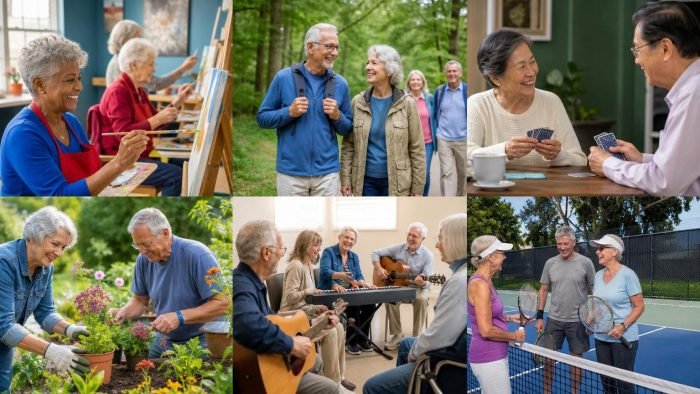
Retirement opens a door to something most people haven’t had since childhood: unstructured time.
That freedom is a gift, but it comes with an uncomfortable truth…
Without intentional effort, your social circle can shrink fast. The colleagues you saw daily, the parents you met at school events, the neighbors you waved to during the morning commute: those connections often fade once work ends.
Finding the right hobbies isn’t just about filling hours.
It’s about building a new social architecture that keeps you connected, healthy, and genuinely excited to get out of bed.
Article Highlights:
- Seven specific hobbies that combine personal fulfillment with real social connection
- Research-backed reasons why each activity supports your physical and mental health
- Practical tips for finding groups near you, even if you’re starting from scratch
- How social hobbies align with a whole-life approach to retirement planning
The Importance of Social Connection in Retirement
Loneliness isn’t just unpleasant: it’s a health risk.
A study published by US Department of Health & Human Services found that social isolation increases the risk of premature death by 26%…
Putting it on par with smoking 15 cigarettes a day.
The Harvard Study of Adult Development, which has tracked participants for over 85 years, consistently finds that the quality of your relationships is the single strongest predictor of long-term health and happiness.
Yet retirement is precisely when many people lose their primary social network.
A 2024 AARP survey found that 34% of adults over 65 report feeling lonely on a regular basis, up from 27% in 2018.
The workplace provided something most of us took for granted: daily, low-effort interaction with a consistent group of people. Replacing that requires deliberate choices.
The good news?
Hobbies built around shared interests create exactly the kind of repeated, meaningful contact that deepens into real friendship.
Sociologists call this “propinquity”: the tendency to form bonds with people you see frequently in a shared context.
The best social hobbies for retirees aren’t random. They’re activities that bring you back to the same people, in the same place, on a regular schedule. That rhythm is what transforms acquaintances into friends.
Join a Local Community Garden
Community gardens are booming across the United States, with the American Community Gardening Association reporting over 29,000 registered plots in 2025.
For retirees, these spaces offer something rare: a reason to show up regularly, work alongside others, and watch something grow together, literally and figuratively.
You don’t need a green thumb to start.
Most community gardens welcome beginners and pair them with experienced members. The plot next to yours becomes a conversation starter, and before long, you’re swapping recipes, sharing surplus tomatoes, and planning next season’s layout over coffee.
Shared Knowledge and Seed Swaps
One of the most social aspects of community gardening is the culture of sharing.
Seed swap events, common in spring, bring gardeners together to trade varieties and tips. These informal gatherings create a knowledge-sharing loop where everyone, from master gardeners to first-timers, has something to contribute.
Many gardens also host seasonal workshops on composting, pest management, and container gardening.
These structured events give you a natural reason to connect with people outside your immediate plot neighbors. You’ll pick up skills while building relationships, and the shared learning experience tends to create bonds faster than purely social events.
Physical Health Benefits of Group Gardening
Gardening is a surprisingly effective workout.
The CDC classifies it as moderate-intensity exercise. Likewise a 2024 study from the University of Colorado found that community gardeners consumed more fiber and got more physical activity than their non-gardening peers.
Digging, planting, weeding, and hauling soil engage your core, arms, and legs without the monotony of a gym.
The group element adds accountability. When you know your garden neighbors are expecting you on Saturday morning, you’re more likely to show up. That consistency matters for both your body and your social life.
Participate in Organized Team Sports
If the word “sports” makes you think of your 25-year-old self sprinting down a field, it’s time for an update.
Organized team sports for older adults have exploded in popularity, with leagues designed specifically for bodies that have a few decades of mileage on them.
The emphasis is on movement, camaraderie, and fun, not competition.
Team sports deliver something solo exercise can’t: built-in social interaction with a shared goal.
You celebrate wins together, commiserate over losses, and develop the kind of inside jokes that only teammates understand.
The Rise of Pickleball for Seniors
Pickleball has gone from backyard curiosity to the fastest-growing sport in America.
The Sports and Fitness Industry Association reported 48.3 million players in 2025, with the 55-plus demographic making up the sport’s most dedicated segment. Courts are popping up in parks, recreation centers, and retirement communities nationwide.
The appeal is straightforward.
Pickleball uses a smaller court than tennis, a lighter paddle, and a plastic ball that moves at manageable speeds.
Rallies last longer, which means more interaction with your partner and opponents. And most public courts operate on a rotation system where you play with different people each game, making it easy to meet a wide circle of players quickly.
Walking Football and Low-Impact Leagues
Walking football, which originated in the UK, has gained steady traction in the US since 2022.
The rules are simple: no running allowed.
This single constraint transforms a high-impact sport into an accessible, social activity that still provides genuine cardiovascular exercise.
Similar low-impact leagues exist for basketball, volleyball, and softball.
Your local parks and recreation department is the best starting point. Many cities now offer senior-specific leagues with modified rules, shorter game times, and a post-game social hour that’s often the real highlight.
Enroll in Lifelong Learning Classes
Your brain craves novelty, and retirement is the perfect time to feed that craving.
Lifelong learning programs at community colleges, universities, and organizations like the Osher Lifelong Learning Institutes (OLLI) offer courses on everything from Italian cooking to astrophysics, with no grades, no exams, and no pressure.
The classroom setting naturally creates social bonds. You’re sitting next to people who share your curiosity about a topic, which is one of the strongest foundations for friendship.
Classes also give your week a structure.
Tuesday morning becomes “Spanish class day,” and the coffee you grab afterward with classmates becomes a ritual. That kind of predictable social contact is exactly what retirement often lacks.
Many programs charge minimal fees or offer scholarships, so cost rarely needs to be a barrier.
Volunteer for Local Non-Profits
Volunteering delivers a double benefit: you help your community while building connections with people who share your values.
The National Archives reports that volunteers over 55 contribute roughly 3.3 billion hours annually, making them the backbone of many non-profit organizations.
The key is finding a role that matches your interests and energy level.
Food banks, animal shelters, hospital visitor programs, and habitat restoration projects all need consistent help. Unlike one-off charity events, regular volunteering puts you in repeated contact with the same team, which is the recipe for genuine friendship.
Research backs this up.
A study published in PLOS ONE in 2024 found that adults who volunteered at least two hours per week had significantly lower rates of depression and reported higher life satisfaction than non-volunteers.
The sense of purpose that comes from contributing to something larger than yourself is a powerful antidote to the identity questions that often surface in early retirement.
Mentoring Younger Generations
If you spent decades building expertise in a profession, mentoring is a way to pass that knowledge forward while staying socially engaged.
Organizations like SCORE (for aspiring entrepreneurs), Big Brothers Big Sisters, and local school tutoring programs actively recruit retired professionals.
Mentoring relationships tend to be deeply rewarding on both sides.
You get the satisfaction of watching someone grow, and the mentee brings fresh perspectives that keep you connected to the working world.
These intergenerational connections are especially valuable because they expand your social network beyond your age group, which research from the Stanford Center on Longevity suggests is linked to greater cognitive resilience.
Start or Join a Book Club
Book clubs are one of the simplest, most reliable ways to maintain regular social contact. They require minimal physical ability, no special equipment, and can meet in living rooms, libraries, coffee shops, or even over video calls.
The structure is built in: read the book, show up, discuss.
What makes book clubs particularly effective for retirees is the depth of conversation they encourage.
You’re not just making small talk about the weather. You’re debating characters’ motivations, sharing personal connections to the story, and hearing perspectives that challenge your own. That kind of meaningful exchange is what separates acquaintances from real friends.
Public libraries are the easiest place to find an existing club, and many have multiple groups organized by genre.
If nothing fits, starting your own is straightforward. Invite four or five people, pick a book, set a date.
The Pew Research Center found in 2025 that 7% of adults over 65 participate in some form of book group, a figure that’s been climbing steadily since the pandemic years.
Explore Creative Arts and Crafting Circles
Creative expression does something unique for your brain and your social life simultaneously.
Whether it’s watercolor painting, quilting, woodworking, or pottery, making things with your hands activates neural pathways associated with focus, relaxation, and satisfaction. Doing it alongside others adds a layer of connection that solo crafting can’t match.
Crafting circles and art groups tend to attract people who are comfortable with conversation but also appreciate companionable silence.
You can chat while your hands are busy, which takes the pressure off forced socialization. For introverts, this “side-by-side” dynamic is often more comfortable than face-to-face social events.
Pottery and Painting Workshops
Pottery studios and painting workshops have seen a surge in popularity among retirees.
Many studios offer multi-week courses that meet the same day each week, creating the kind of consistent social rhythm that builds friendships. You’ll learn a skill, produce something tangible, and develop relationships with your classmates along the way.
Look for studios that offer open studio hours in addition to structured classes.
These drop-in sessions let you work at your own pace while still being around other people.
The informal atmosphere often leads to the most natural conversations, and you might discover that the person at the next wheel shares your taste in music, travel, or food.
Get Involved in Strategic Board Game Groups
Board gaming has undergone a renaissance.
Forget the dusty Monopoly box in your closet. Modern board games are sophisticated, strategic, and incredibly social. Games like Catan, Ticket to Ride, Wingspan, and Azul attract players of all ages and create the kind of friendly competition that sparks conversation and laughter.
Board game cafes have become common in mid-size and large cities, and many host weekly meetups or “learn to play” nights specifically designed for newcomers.
The games provide a structured activity that eliminates the awkwardness of unstructured socializing. You have a shared focus, clear rules, and natural moments for conversation between turns.
For retirees specifically, strategic games offer cognitive benefits that casual activities don’t.
Studies have shown adults who regularly engaged in strategic games showed slower rates of cognitive decline compared to those who didn’t.
You’re exercising your brain while having fun and meeting people: that’s a triple win.
How to Find and Join Local Hobby Groups
Knowing the best hobbies for staying social in retirement is only half the equation.
You also need to find groups near you and actually walk through the door, which can feel intimidating after years of built-in workplace socializing.
Start with these practical steps:
- Check your local library’s bulletin board and events calendar: libraries are community hubs with free programming
- Search Meetup.com for groups in your area filtered by interest and age range
- Call your city’s parks and recreation department for a current schedule of senior programs
- Visit your nearest community center or YMCA and ask about clubs, leagues, and classes
- Ask at your place of worship, if applicable, since many churches and temples run hobby groups
The first visit is always the hardest.
Give yourself permission to feel awkward. Most groups expect newcomers to be a little quiet at first, and regulars are usually eager to welcome fresh faces.
Commit to attending at least three times before deciding whether a group is right for you. One visit rarely tells the full story.
At Hero Retirement, we think about fulfillment through four HERO pillars: Health, Enjoyment, Returns, and Opportunity. Social hobbies touch every one of those. They keep you physically active, bring genuine pleasure, pay dividends in mental health, and open doors to new experiences you didn’t see coming.
The retirees who thrive aren’t the ones with the biggest portfolios.
They’re the ones who build lives rich in connection, purpose, and regular reasons to leave the house. Pick one hobby from this list. Find a group. Show up this week. Your future self will thank you.
Frequently Asked Questions
What if I’m an introvert and group activities feel overwhelming?
Start with activities that have a built-in focus, like crafting circles, book clubs, or board game nights. These give you something to do with your hands or mind, which reduces the pressure of constant conversation. Many introverts find “parallel play” activities, where you work alongside others rather than facing them directly, much more comfortable than purely social gatherings.
How many social hobbies should I pursue at once?
Two or three is a good starting point. You want enough variety to keep things interesting, but not so many commitments that your calendar feels like a job. Consistency matters more than quantity. Showing up to one group every week builds stronger friendships than attending five groups sporadically.
Are these hobbies expensive?
Most of the hobbies listed here are free or very low-cost. Community gardens typically charge $20 to $75 per season for a plot. Library book clubs and volunteer positions cost nothing. Pickleball requires a paddle ($15 to $40 for a beginner model) and access to a public court. Lifelong learning programs vary, but many offer senior discounts or fee waivers.
I recently moved to a new city for retirement. How do I start from zero?
Moving is actually an advantage in one respect: you don’t have the inertia of existing routines holding you back. Hit the library first, as librarians are often the best-connected people in any community. Sign up for a class, join a garden waitlist, and attend a Meetup event within your first two weeks. Building momentum early prevents isolation from setting in.
Can online hobby groups replace in-person ones?
Online groups are a useful supplement, especially for book clubs or learning communities, but they shouldn’t be your only source of social contact. Physical presence, sharing a room with others, making eye contact, laughing together, creates neurological responses that video calls simply can’t replicate. Use online groups to expand your network, but prioritize at least one regular in-person activity.