

You spent decades waking up to an alarm, a calendar full of meetings, and a to-do list that organized your hours before you even made coffee.
Then retirement arrived…
And suddenly, the whole day was yours.
For a few weeks, that felt like pure freedom. Then, quietly, the days started to blur together.
You’re not alone. The loss of work structure is one of the least-talked-about challenges of retirement. It’s not a personal failing. It’s a design problem. And design problems have solutions.
Building a retirement routine isn’t about recreating the office. It’s about crafting a rhythm that makes space for the things you actually want more of: movement, creativity, connection, rest, and meaning.
The key? Start with a simple framework, personalize it to your life, and give yourself permission to refine it as you go.
Article Highlights
- Your morning sets the tone: Retirees with a consistent morning routine report higher life satisfaction. Aim to anchor your day with at least 3 intentional habits before noon.
- Physical activity is non-negotiable: CDC guidelines recommend 150 minutes of moderate aerobic activity per week; building movement into your daily structure is the easiest way to hit it.
- Social connection matters more than you think: Research shows that socially isolated older adults face significantly higher health risks. Plan for at least 1 social interaction every single day.
- The 3-block framework works: Dividing your day into a Morning Block, Midday Block, and Afternoon/Evening Block gives you freedom and purpose, without the rigidity of a nine-to-five.
- Seasonal reviews keep routines fresh: Scheduling a quarterly check-in on your routine prevents the drift that turns purposeful days into restless ones.
Why Daily Structure Matters in Retirement
The Psychology Behind Losing Work Routine
Work gave you more than a paycheck.
It gave you time structure, social roles, a sense of accomplishment, and built-in reasons to get up and get moving.
When those scaffolds disappear overnight, many retirees feel adrift. Not because retirement is bad, but because the brain genuinely needs a replacement framework.
This isn’t a niche problem.
Studies consistently show that unstructured time in retirement correlates with lower wellbeing, even among people who have more than enough money. The good news: structure is entirely learnable and fully customizable.
If you want a deeper look at the emotional landscape of this transition, our guide to what being retired really means day to day is a great starting point.
Structure vs. Rigidity: An Important Distinction
Structure and rigidity are not the same thing. A rigid schedule tells you exactly what to do at 10:47 a.m. A good structure simply ensures that each day contains the ingredients that make you feel well, engaged, and connected.
Think of it like a recipe rather than a script. The recipe calls for protein, vegetables, and a grain. What that looks like on Tuesday is entirely up to you.
The goal is intentional flexibility: a loose enough frame that spontaneity fits inside it, but firm enough that you don’t spend half the day wondering what to do next.
What the Research Actually Says
A consistent body of research on aging and wellbeing points to the same handful of factors: regular physical activity, meaningful social contact, a sense of purpose, and predictable daily rhythms. None of those require a job. They do require a plan.
Retirees who proactively build structure into their days report higher life satisfaction, better sleep quality, and lower rates of depression than those who leave their days entirely open.
The structure itself is the signal to your brain that today matters.
How to Create a Morning Routine That Sets You Up for Success
What Time Should You Wake Up?
There’s no universally correct wake-up time in retirement.
What matters far more than the hour is consistency. Waking within a 30-minute window each day (even on weekends) helps regulate your circadian rhythm, improves sleep quality, and gives your day a reliable launch point.
Most retirees find a window between 6:30 and 8:00 a.m. works well. Early enough to feel productive, late enough to enjoy the rest they’ve earned. But if you’re a genuine night owl, 8:30 is fine. Pick a time and keep it.
For a broader look at building physical and mental wellness habits into your daily life, see our physical and mental wellness habits for retirees guide.
The 3-Habit Morning Anchor
The simplest morning routine that works: choose 3 anchor habits you do every morning before anything else pulls your attention. These could be a 20-minute walk, journaling, stretching, a healthy breakfast, meditation, or reading. The specific habits matter less than the fact that they’re yours and they’re consistent.
Anchor habits work because they create a chain reaction.
Completing even one small intentional act early in the day primes you to follow through on the rest of it. Psychologists call this a “keystone habit”: one behavior that tends to pull other good behaviors behind it.
Start with just one if three feels like too much. Add the second and third over the following weeks.
Protecting Your Morning From Screen Drift
One of the fastest ways to lose a morning in retirement is picking up your phone within the first few minutes of waking. News, social media, and email are all designed to hijack your attention. Once they have it, an hour disappears.
Try a simple rule: no screens for the first 30 minutes of your day. Use that window for your anchor habits instead. You’ll be surprised how much more intentional the rest of the morning feels.
This isn’t about being anti-technology. It’s about deciding what gets your freshest attention.
Building Your Core Activities: Movement, Hobbies, and Connection
Making Movement a Daily Non-Negotiable
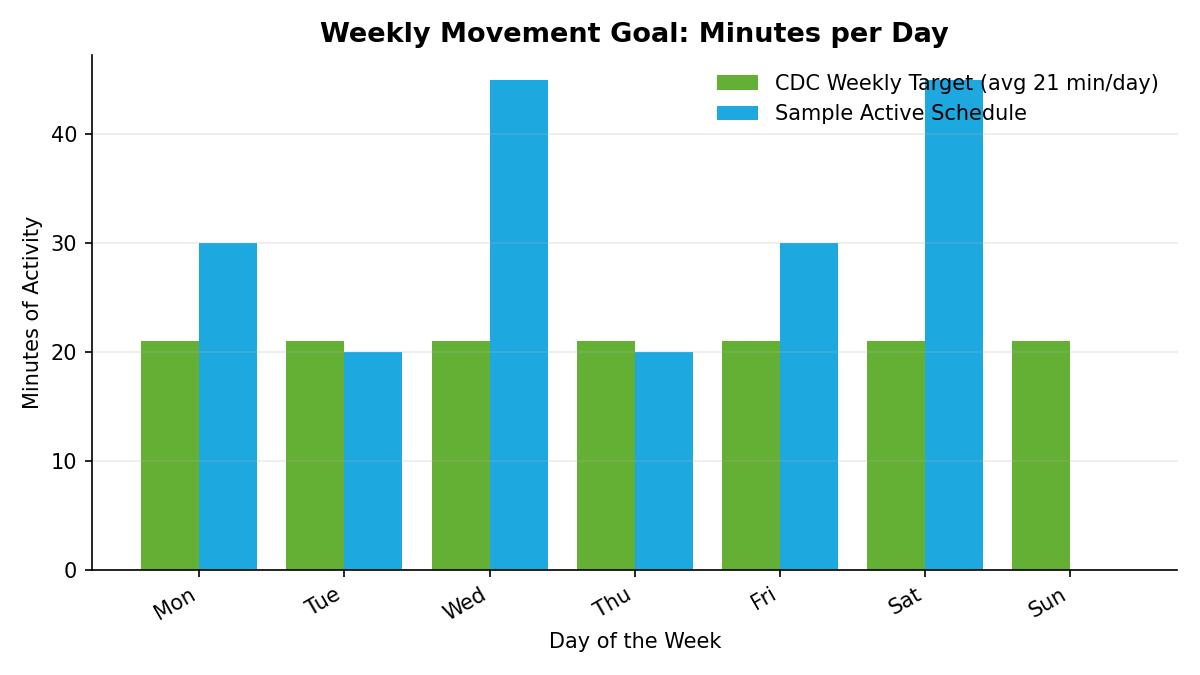
Per CDC guidelines, adults 65 and older should aim for 150 minutes of moderate-intensity aerobic activity per week, plus muscle-strengthening activities on two or more days.
That averages out to about 21 minutes of movement per day. Suddenly it sounds very achievable.
Building movement into the structure of your day (rather than treating it as an optional extra) is the single highest-return habit you can develop in retirement. A morning walk, a midday swim, an afternoon bike ride. The form doesn’t matter; the consistency does.
If you’re starting from a low base, even 10 minutes a day is a proven starting point. The key is making it a scheduled part of your day, not something you squeeze in if time allows.
Carving Out Time for Purposeful Hobbies
Hobbies aren’t just leisure.
They’re the engine of purpose, skill-building, and creative satisfaction in retirement. The retirees who thrive tend to have at least one hobby that challenges them, one that relaxes them, and one that connects them to other people.
Schedule hobby time the same way you’d schedule an important meeting. Give it a consistent slot in your week — say, Tuesday and Thursday afternoons — and protect it.
Looking for ideas? Our roundup of hobbies that also keep you socially connected covers seven activities that tick both boxes at once.
Building Social Time Into Every Day
Social isolation is one of the most significant health risks for older adults, full stop. The antidote isn’t grand gestures. It’s small, regular contact: a phone call with a friend, a coffee with a neighbor, a class where you see the same faces each week.
Aim for at least one meaningful social interaction each day. It doesn’t have to be long. It does have to be real: genuine conversation, not just scrolling someone’s social media feed.
If your social circle has contracted since retirement, that’s fixable. Build social connections in retirement in 7 quick ways gives you concrete starting points.
Weekly Planning: A Framework for Purposeful Days
The 3-Block Daily Framework
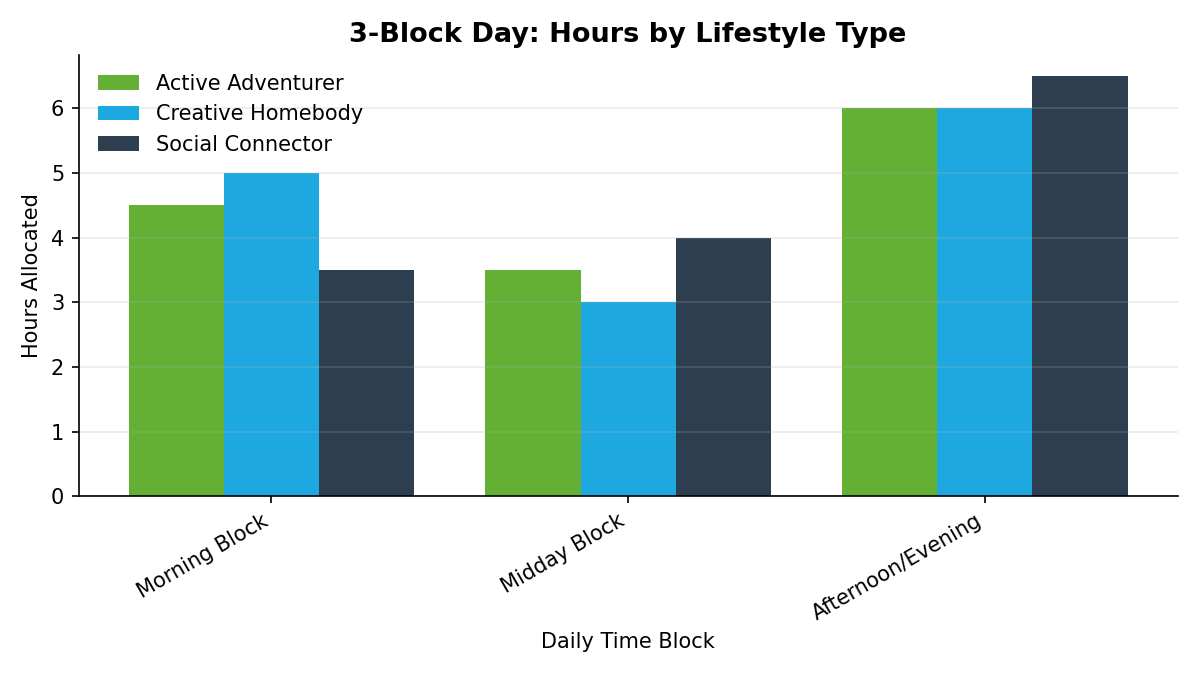
Instead of scheduling every hour, try dividing each day into three blocks: Morning (wake-up through noon), Midday (noon to 3 p.m.), and Afternoon/Evening (3 p.m. to bedtime). Assign a primary theme to each block rather than a precise timetable.
- For example: Morning for health and high-energy activities. Midday for errands, admin, or learning. Afternoon/Evening for social time, hobbies, and rest. This structure gives shape to your day without boxing you in.
Once the three-block framework feels natural, you can get more specific inside each block. But many retirees find the three-block level of structure is all they need. For more on building a genuinely fulfilling retirement, see our strategies for a fulfilling retirement life.
Your Weekly Planning Session
Set aside 15-20 minutes every Sunday (or whichever day bookends your week) to sketch out the coming week. This doesn’t need to be a detailed planner. Three columns work fine: what you’ll do for your health this week, what you’re looking forward to, and what you need to handle.
This weekly preview does two things.
First, it makes sure the week ahead has the ingredients you want in it — not just appointments and obligations. Second, it gives you a moment to feel intentional about how your time is spent.
Google Calendar, a paper weekly planner, or even a simple notepad all work equally well. Use whatever you’ll actually open.
Seasonal and Quarterly Routine Reviews
The routine that works perfectly in January may feel stale by April. Seasons change your energy, your social landscape, and what activities are available to you. Building in a quarterly review keeps your structure alive rather than letting it calcify.
Each quarter, ask yourself: what’s working well? What feels like a chore? What have I been meaning to add but haven’t? A 30-minute review four times a year is all it takes to keep your routine genuinely yours.
This is also a great time to check whether your living environment still serves your ideal daily life. If you’ve been wondering whether your city truly fits the retirement you’re building, our guide to the safest cities to retire in 2026 goes well beyond crime stats.
Sample Daily Schedules for Different Retirement Lifestyles
The Active Adventurer
| Time | Activity |
|---|---|
| 6:45 a.m. | Wake, coffee, quick journal entry |
| 7:15 a.m. | 45-minute walk or bike ride |
| 8:30 a.m. | Breakfast |
| 9:30 a.m. | Purposeful project time: travel planning, volunteer work, learning something new |
| 12:00 p.m. | Lunch, light errands |
| 2:00 p.m. | Afternoon activity: golf, swimming, pickleball, or similar |
| 5:00 p.m. | Dinner prep, social call or time with family |
| 7:30 p.m. | Leisure reading, light TV |
| 9:30 p.m. | Wind-down and sleep |
This schedule front-loads physical energy, makes room for a meaningful midday project, and keeps the afternoon active without exhausting the evening.
The Creative Homebody
| Time | Activity |
|---|---|
| 7:30 a.m. | Wake, slow breakfast, no screens |
| 8:30 a.m. | 20-minute gentle walk or yoga |
| 9:15 a.m. | Creative work: writing, painting, music, gardening |
| 12:00 p.m. | Lunch |
| 1:00 p.m. | Errands, reading, or admin tasks |
| 3:00 p.m. | Social time: coffee with a neighbor, phone call, community class |
| 6:00 p.m. | Dinner |
| 7:30 p.m. | Hobby continuation or relaxed TV/film |
| 10:00 p.m. | Wind-down |
The creative homebody schedule protects a long, uninterrupted morning block for the work that matters most, while making social connection a deliberate afternoon fixture.
The Social Connector
| Time | Activity |
|---|---|
| 7:00 a.m. | Wake, morning routine, breakfast |
| 8:30 a.m. | Exercise: group fitness class, walking group, or swim |
| 10:00 a.m. | Community or volunteer activity |
| 12:30 p.m. | Lunch, often with others |
| 2:30 p.m. | Personal time: reading, napping, household tasks |
| 5:00 p.m. | Family or friend time: dinner out, video call, neighborhood gathering |
| 8:30 p.m. | Quiet evening wind-down |
For the social connector, group exercise and community activities do double duty: they take care of physical health while delivering the social contact that makes retirement feel rich.
Common Mistakes to Avoid When Structuring Your Retirement Day
Over-Scheduling Every Hour
One of the most common mistakes newly retired people make is building a retirement schedule that looks exactly like a work calendar: every hour blocked, every day fully booked. This trades one kind of exhaustion for another.
Leave white space in your schedule. Unplanned time isn’t wasted time; it’s breathing room that allows spontaneity, rest, and the unexpected good thing to happen. Aim for no more than four or five committed activities per day.
If you find yourself compulsively filling every gap, that’s worth noticing. It may signal discomfort with stillness, which is entirely normal and worth addressing directly — not just scheduled around.
Letting Television Fill the Gap
Television and streaming services are expertly designed to absorb time.
There’s nothing wrong with enjoying great TV in retirement. The problem arises when screen time becomes the default response to an unstructured hour rather than a deliberate choice.
A useful test: when you sit down to watch something, is it because you’re genuinely choosing to, or because you don’t know what else to do? The former is leisure. The latter is drift.
Set an intentional TV window — say, one to two hours in the evening — and protect the rest of your day for activities that move, connect, or challenge you.
Neglecting the Evening Routine
Most retirement routine advice focuses on mornings. But a consistent evening wind-down is equally important, especially for sleep quality. Poor sleep accelerates cognitive decline, weakens immunity, and drains the energy you need for everything else.
A simple wind-down: dim lights by 9 p.m., reduce screen brightness, do something calming for 30-45 minutes (reading, light stretching, listening to music), and aim for a consistent bedtime. The consistency matters more than the specific ritual.
Good sleep is the foundation that makes every other part of your retirement structure actually work.
Tools and Systems to Maintain Your Retirement Routine
There’s one connection worth making here before diving into the tools themselves.
A well-structured day does something most people don’t expect: it quietly improves your financial picture. When your days are full of movement, hobbies, and meaningful connection, boredom spending drops naturally. Your lifestyle costs become more predictable, and that predictability opens up more room in the budget for travel, experiences, and the things that genuinely matter to you.
Simple Tools That Actually Work
You don’t need a complex system. You need one you’ll use. The most effective tools for maintaining a retirement routine tend to be simple: a paper planner or wall calendar for weekly visibility, a phone alarm for anchor habit reminders, and a notes app or notebook for your weekly planning session.
Apps like Streaks, Habitica, or Google Calendar work well for habit tracking and light scheduling. What matters is picking one system and giving it a few weeks to take hold before deciding whether it fits.
The biggest trap is tool-hopping: spending more time managing your productivity system than actually living your day.
Habit Stacking: The Easiest Way to Build New Routines
Habit stacking means attaching a new behavior to an existing one. After I pour my morning coffee, I will sit down and journal for five minutes. After my afternoon walk, I will call one friend. The existing habit acts as an automatic trigger for the new one.
This technique dramatically reduces the mental effort of building new routines because you’re not creating a new decision point from scratch. You’re borrowing momentum from something you already do reliably.
Start with one habit stack and add a second only after the first is solid (typically two to four weeks). Small and consistent beats ambitious and abandoned every time.
When Your Routine Stops Working
Every retirement routine has an expiration date. Life changes: health shifts, family circumstances evolve, interests deepen or fade. When your routine starts feeling like a chore rather than a framework, that’s your cue to revise it — not abandon it.
Give yourself full permission to redesign your days from scratch every few months. The point was never to follow a specific schedule. The point is to keep building days that feel worth living.
For a broader perspective on building a retirement that truly works across all dimensions of your life, it’s worth asking the one retirement question most financial advisors never ask. It reframes everything.
Putting It All Together
Retirement isn’t a permanent vacation. It’s a new chapter that deserves just as much intentional design as the career that came before it.
You don’t need a perfect schedule on day one. You need a starting framework: a consistent wake time, three morning anchor habits, movement built into your day, and at least one meaningful social interaction. Add a weekly planning session, protect some white space, and schedule a quarterly review. That’s it.
Over time, your routine becomes the infrastructure of a life you genuinely love. Adjust it freely. Rebuild it when it stops serving you. The goal was never a perfect timetable. It was a retirement that feels alive.
Take action now: grab a notepad this Sunday, sketch out your three daily blocks, and name one anchor habit you’ll start tomorrow. One small step today is all it takes to build a retirement day you look forward to waking up for.
Frequently Asked Questions
How much should you plan your day in retirement?
Aim to give structure to roughly half your waking hours and leave the rest open for spontaneity and rest. A simple three-block framework (morning, midday, afternoon/evening) with four to five committed activities per day is enough for most retirees to feel purposeful without feeling over-scheduled. More than that often creates the same pressure retirees were glad to leave behind.
What is the best time to wake up in retirement?
Consistency matters far more than the specific hour. Waking within a 30-minute window each day supports your circadian rhythm and sleep quality regardless of whether that window is 6:30 a.m. or 8:30 a.m. Pick a time that lets you feel rested and gives you a full, productive morning, then stick to it even on weekends.
What is the biggest mistake most people make when structuring their retirement day?
The most common mistake is leaving the day entirely unplanned and allowing screen time to fill the gaps by default. Without even a loose daily structure, unscheduled hours tend to drift toward passive activities, which research from the National Institute on Aging links to lower life satisfaction and higher rates of depression in older adults. A simple framework with a few anchor habits solves this quickly.
What are the key components of a well-structured retirement day?
A well-structured retirement day typically includes: a consistent wake time and morning anchor habits; at least 20-30 minutes of physical movement; a purposeful midday activity such as a hobby, learning, or volunteering; at least one meaningful social interaction; and a calming evening wind-down routine that supports good sleep. You don’t need all five perfectly every day — but having all five represented across your week makes a real difference.