
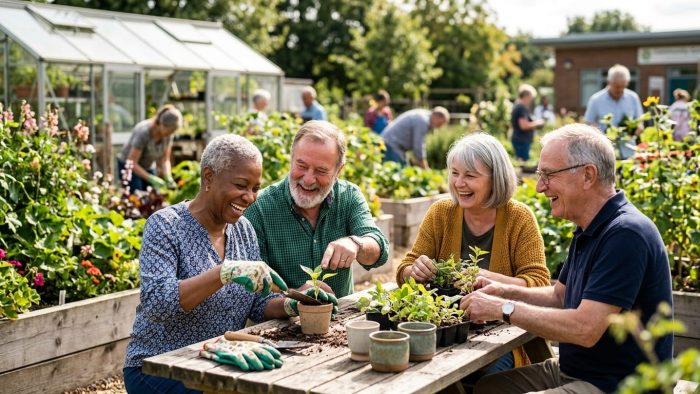
Retirement opens up a world of free time.
But that freedom can feel surprisingly empty without people to share it with.
The daily social fabric that work provides – casual conversations, team lunches, after-work drinks – disappears almost overnight. For many retirees, the challenge isn’t filling their schedule…
It’s filling it with meaningful human connection.
Building social connections in retirement doesn’t require a personality overhaul or a packed calendar. It does require intention. The good news? Small, consistent steps can transform your social life faster than you’d expect.
Article highlights:
- Loneliness among older adults is rising sharply, but it’s a solvable problem with the right approach
- Community centers, hobby groups, and volunteer work offer the fastest paths to new friendships
- Digital tools and fitness activities create surprisingly effective social bridges
- Maintaining relationships takes ongoing effort, but the health payoff is enormous
The Importance of Social Wellness in Your Golden Years
Retirement marks one of life’s biggest identity shifts.
You go from being defined partly by your job title and workplace relationships to suddenly needing to rebuild your social world from scratch. This transition catches many people off guard, especially those who assumed friendships would just happen naturally.
Social wellness isn’t a luxury in retirement. It’s a health necessity on par with exercise and nutrition.
The Hero Retirement framework captures this through its HERO pillars: Health, Enjoyment, Returns, and Opportunity. Each pillar depends on the others, and social connection threads through all four.
You can’t fully enjoy your retirement, stay healthy, or find new opportunities if you’re spending most days alone.
Combatting Retirement Isolation
The numbers tell a sobering story.
Roughly 41% of Americans in their 60s report being lonely in 2025, up from 32% in 2010. That’s not a small uptick. It’s a trend that’s accelerating.
Nearly a quarter of adults aged 65 and older feel they don’t have enough close friends, and almost a third say they have no one to reach out to when life gets hard.
Men face a particularly steep challenge, with 42% reporting loneliness compared to 37% of women.
This gap often stems from men building their social lives primarily around work, leaving fewer independent friendships when they retire. And 38% of older adults say making new friends is simply harder than it used to be.
That’s an honest assessment, not an excuse. Acknowledging the difficulty is the first step toward doing something about it.
Health Benefits of Strong Social Ties
The health case for staying socially connected is striking.
Social isolation has been linked to roughly a 50% increased risk of certain diseases, including dementia and heart disease. On the flip side, people with strong social networks tend to live longer, recover from illness faster, and maintain sharper cognitive function well into their 80s and beyond.
Depression is another serious concern.
An estimated 8.7 million older adults have struggled with depression, and loneliness is one of its most reliable triggers. Regular social interaction acts as a buffer against depressive episodes, giving you reasons to get out of bed, stay active, and maintain a sense of purpose.
Think of your social life as preventive medicine – it costs nothing and the side effects are all positive.
Leverage Local Community Centers and Senior Hubs
Your local community center is probably the most underused social resource within driving distance of your home.
Most centers offer a rotating calendar of activities: card games, book clubs, art classes, potluck dinners, day trips, and more. The beauty of these spaces is that everyone who walks through the door is there for the same reason – to connect.
Senior centers have evolved dramatically from the stereotype many people carry.
Modern senior hubs often feature fitness studios, computer labs, and even coworking spaces for retirees running small businesses or passion projects. Many also host health screenings, financial literacy workshops, and support groups.
Start by simply showing up to one event that interests you. You don’t need to commit to anything long-term. Just walk in, introduce yourself, and see what clicks.
Most centers post their schedules online, so you can browse from home before making the trip.
The social dynamics at these places tend to be welcoming because regulars understand what it feels like to be new. If you attend the same activity two or three times, you’ll start recognizing faces. That recognition turns into small talk, which turns into friendship. It’s a low-pressure environment designed for exactly this purpose.
Turn Hobbies into Social Opportunities
One of the fastest ways to build social connections during retirement is to take something you already enjoy and do it alongside other people.
Shared interests create an instant foundation for conversation and eliminate the awkwardness of trying to connect with strangers over nothing in particular. As we cover in our complete guide to retirement hobbies, the right hobby can transform your daily routine and your social life simultaneously.
Joining Niche Interest Groups
Whatever you’re into, there’s a group for it.
Birdwatching, woodworking, model trains, quilting, photography, genealogy, amateur radio – the list is endless. Niche groups are particularly effective for building friendships because they attract people who share a specific passion, which means conversations flow naturally.
Check your local library bulletin board, community Facebook groups, or websites like Meetup.com.
Many hobby shops also host regular gatherings. A camera store might run monthly photo walks. A game shop might host weekly board game nights. These environments are self-selecting: everyone there chose to be there because they care about the same thing you do.
Taking Educational Workshops
Learning something new alongside others creates a unique bond.
Community colleges, libraries, and parks departments offer affordable workshops on everything from watercolor painting to smartphone photography to conversational Spanish. Many universities also run audit programs where retirees can sit in on courses for free or at reduced cost.
The classroom setting naturally encourages interaction.
You’ll ask each other questions, share notes, and compare projects. These relationships often extend beyond the classroom into coffee dates and study groups. Pick a subject you’ve always been curious about and sign up. You’ll gain a new skill and new friends in the same stroke.
Volunteer for Purpose-Driven Interaction
Volunteering solves two retirement challenges at once: finding purpose and finding people.
When you volunteer, you’re placed alongside others who share your values, which is one of the strongest foundations for lasting friendship. Food banks, animal shelters, hospitals, literacy programs, and habitat restoration projects all need consistent help.
The key is choosing something you genuinely care about, not just whatever’s convenient.
If you love animals, volunteer at a shelter. If you’re passionate about education, tutor kids at a local school. Your enthusiasm will be obvious, and it’ll attract like-minded people. Organizations like Habitat for Humanity, Meals on Wheels, and local conservation groups always welcome retirees who can offer flexible daytime availability.
Volunteering also provides structure, which many retirees miss more than they expected. Having a regular Tuesday morning shift at the food pantry gives your week a rhythm and guarantees face-to-face interaction.
Over time, your fellow volunteers become your community.
Utilize Digital Tools to Connect Locally
Technology isn’t just for younger generations. Used well, it’s one of the quickest ways to find social opportunities in your area.
The goal isn’t to replace in-person connection but to discover it more efficiently.
Finding Meetups via Apps
Meetup.com remains one of the best platforms for finding local interest groups.
You can search by category: hiking, cooking, book clubs, board games, language exchange, and dozens more. Many groups specifically welcome newcomers and host regular events with low commitment.
Facebook Groups are another goldmine.
Search for your city or neighborhood plus keywords like “retirees,” “over 60,” or your specific hobby. These groups often post about upcoming events, informal get-togethers, and local happenings you’d never find otherwise. Eventbrite also lists community events, many of which are free.
Engaging in Neighborhood Social Networks
Platforms like Nextdoor connect you with people who live within blocks of your home.
While it’s often associated with lost-pet posts and package theft alerts, Nextdoor also hosts neighborhood events, skill-sharing offers, and interest-based groups. Some neighborhoods organize regular coffee meetups, garage sale weekends, or block parties through the platform.
The proximity factor matters.
When your new friends live nearby, getting together becomes easier. There’s no long drive or complicated scheduling. You can walk over for coffee on a Tuesday morning or join a spontaneous group walk.
That convenience translates to more frequent interaction, which is what turns acquaintances into real friends.
Prioritize Physical Activity with Others
Exercise is more enjoyable and more sustainable when you do it with other people.
Group physical activity checks two critical boxes: it keeps your body healthy and it keeps your social calendar full. The accountability factor alone makes a difference. You’re far more likely to show up for a morning walk when someone’s expecting you.
Walking Clubs and Fitness Classes
Walking clubs are everywhere, and they’re free.
Check your local parks department, senior center, or mall (yes, many malls host early-morning walking groups). The pace is typically moderate, and the atmosphere is social rather than competitive. You talk while you walk, which makes an hour feel like fifteen minutes.
Fitness classes designed for older adults – think yoga, tai chi, water aerobics, or chair fitness – offer another reliable path to connection.
The shared experience of learning new movements, laughing at mistakes, and encouraging each other creates a natural camaraderie. Many gyms and YMCAs offer senior-specific class schedules with discounted memberships. Silver Sneakers, available through many Medicare Advantage plans, provides free gym access and group classes at thousands of locations nationwide.
Reconnect with Former Colleagues and Old Friends
You don’t have to start from zero.
Many retirees overlook the relationships they already have. Former coworkers, college roommates, childhood friends, and old neighbors are all potential reconnections waiting to happen. LinkedIn, Facebook, and even a simple phone call can reopen doors that quietly closed over busy decades.
Start with one person. Send a text, an email, or pick up the phone. Something as simple as “I’ve been thinking about you – want to grab lunch?” works. Most people are flattered to be remembered and happy to reconnect. You might be surprised how quickly old friendships reignite.
Consider organizing a recurring get-together with former colleagues.
A monthly lunch or quarterly dinner keeps the group connected without overwhelming anyone’s schedule. These reunions often expand naturally as people bring spouses or other friends. The shared history you have with these people provides a depth of connection that new friendships take years to develop.
Foster Intergenerational Relationships
Limiting your social circle to people your own age means missing out on some of the most enriching relationships available.
Younger people bring fresh perspectives, energy, and often a willingness to help with technology or physical tasks. In return, you offer experience, patience, and wisdom that can’t be Googled.
Mentoring programs pair retirees with younger adults or teens who benefit from guidance.
Organizations like SCORE connect retired professionals with aspiring entrepreneurs. Big Brothers Big Sisters welcomes older volunteers. Even informal mentoring – helping a neighbor’s kid with college applications or teaching a young coworker’s child to fish – builds meaningful bonds.
Grandparent-like relationships don’t require biological grandchildren.
Many schools and daycares welcome volunteer “grandparents” who read to children, help with crafts, or simply provide a caring adult presence. These interactions are good for the kids and remarkably good for you. Studies consistently show that intergenerational contact reduces loneliness and increases life satisfaction for older adults.
Maintaining Your New Social Circle for the Long Term
Making friends is one thing. Keeping them is another.
Relationships need consistent attention, especially new ones. The first few months are critical. If you meet someone you click with, follow up within a week. Suggest a specific activity and time rather than a vague “we should get together sometime.”
Build routines around your social connections.
A standing Wednesday coffee date, a biweekly game night, or a monthly potluck dinner gives your friendships structure. These anchors prevent the drift that happens when everyone’s schedule is open but nothing’s planned. Put social commitments on your calendar just like doctor’s appointments – they’re equally important for your health.
Be the initiator. Don’t wait for invitations.
The people who maintain the strongest social networks in retirement are the ones who pick up the phone, send the text, and organize the outing. It takes effort, especially at first. But the return on that effort – in happiness, health, and sense of belonging – is extraordinary.
You’ve spent decades building a career. Now it’s time to build the relationships that will define this next chapter.
Start with one step this week: sign up for a class, call an old friend, or walk into your local community center. Your future self will thank you.
Frequently Asked Questions
How do I make friends in retirement if I’m naturally introverted?
Being introverted doesn’t mean you don’t want connection – it means you recharge through quieter interaction. Focus on smaller group activities like book clubs, art classes, or one-on-one coffee dates rather than large social events. Many introverts find that shared activities (walking, crafting, gardening) feel more comfortable than purely social gatherings because the activity itself provides a focus. Start with one outing per week and build from there at your own pace.
What if I’ve recently moved to a new area for retirement?
Relocating in retirement is common, and it’s one of the situations where loneliness risk spikes. Prioritize joining two or three local groups within your first month: a fitness class, a volunteer organization, and a hobby group are a solid combination. Visit your local community center or library within the first week. Nextdoor and local Facebook groups can also help you learn about neighborhood events quickly. The key is acting fast rather than waiting until loneliness sets in.
How many social connections do I actually need to stay healthy?
Research suggests quality matters more than quantity. Having three to five close, reliable relationships provides most of the health and emotional benefits associated with social connection. You don’t need a massive social circle. You need people you can call when things are hard and people who make ordinary days more enjoyable. Focus on deepening a few relationships rather than collecting dozens of acquaintances.
Does online socializing count as real social connection?
Video calls, group chats, and online communities do provide real social benefits, especially for maintaining long-distance relationships. However, they work best as a supplement to in-person interaction, not a replacement. Face-to-face contact triggers neurochemical responses – like oxytocin release – that screens can’t fully replicate. Use digital tools to find and coordinate local meetups, stay in touch between visits, and connect with far-flung friends. But make in-person time the priority whenever possible.