

You’ve spent decades in federal service. You’ve earned your FEHB coverage — and in retirement, it can stay with you for life.
But here’s what most federal employees don’t realize: a handful of decisions made in the final months before retirement can quietly undermine the coverage you’ve worked so hard to keep.
We’re not talking about obscure technicalities…
These are common, fixable mistakes that real federal employees make every year — often without knowing it until it’s too late to change course.
Some mistakes lock you into a plan that doesn’t cover your doctors. Others leave your spouse without protection. A few can even cause you to lose FEHB eligibility in retirement entirely.
The good news? Every mistake on this list is preventable with the right information and a little lead time.
In this article, you’ll learn 9 FEHB mistakes federal employees make before retiring — and the specific steps to avoid each one.
Your coverage. Your call. Let’s get it right.
1) Choosing an FEHB Plan Based Only on Premium Cost
What’s being missed
Many federal employees sort the Open Season plan list by premium and pick the cheapest option. It feels responsible. It often isn’t.
Why it matters
In retirement, your out-of-pocket costs — deductibles, copays, coinsurance, and annual limits — frequently matter more than the monthly premium.
A low-premium plan with high cost-sharing can cost you thousands more per year if you have regular prescriptions, specialist visits, or planned procedures. OPM’s plan comparison tool shows the full picture, but only if you use it.
How to fix it
Pull your last 12 months of EOBs (Explanation of Benefits) and tally what you actually spent. Then compare total estimated annual cost — premiums plus typical out-of-pocket — across your top three plan candidates. The plan that looks expensive on paper is often the better deal in practice.
Give yourself at least 60 days before Open Season closes to do this comparison honestly.
2) Not Verifying Your Doctors Are In-Network Before Switching Plans
What’s being missed
You find a plan with lower premiums and switch during Open Season. Your retirement date arrives. Then you discover your cardiologist or primary care doctor isn’t covered under the new plan.
Why it matters
Network changes happen every year. A provider who was in-network last January may not be this January. If you’re managing a chronic condition or have an ongoing specialist relationship, losing that provider mid-treatment can genuinely disrupt your care.
How to fix it
- Go directly to the plan’s online provider directory and search your doctors by name.
- Call the provider’s billing office to confirm they’re still accepting that plan.
- Do this every time you consider changing plans, not just at retirement.
For a broader look at your options, see our guide to Federal Health Insurance Options for Retirees.
3) Not Meeting the 5-Year Enrollment Rule Before Retiring
What’s being missed
This is the mistake that can eliminate your FEHB coverage in retirement altogether. Many federal employees don’t know the rule exists until it’s almost too late.
Why it matters
Per OPM eligibility requirements, you must be continuously covered by FEHB for the five full years immediately before your retirement date to carry that coverage into retirement. That coverage can come from your own enrollment or from being covered as a family member under a spouse’s FEHB enrollment — both count.
What creates a disqualifying gap is dropping FEHB entirely, such as going uninsured or enrolling in a non-FEHB plan during that window.
How to fix it
Log into your official personnel file or ask your HR office to confirm your continuous coverage dates right now. If you discover a gap, talk to your HR benefits officer immediately. This rule is the foundation everything else on this list is built on.
4) Ignoring How FEHB Coordinates With Medicare
What’s being missed
Federal employees often approach retirement without a clear plan for how FEHB and Medicare Parts A and B will work together.
Why it matters
Medicare Part A is premium-free for most people who’ve paid into the system. Part B carries a monthly premium. For some retirees, enrolling in both FEHB and Part B creates powerful coordination that dramatically reduces out-of-pocket costs. For others, it’s redundant spending. The right answer depends entirely on your specific plan and health usage.
How to fix it
Use OPM’s FEHB and Medicare coordination resources to compare how your specific plan pays claims with and without Part B.
Your plan’s brochure (Section 9) will spell out the coordination rules. Federal employees covered by FEHB through active employment can delay Part B past age 65 without penalty. Upon retirement, you receive an 8-month Special Enrollment Period beginning the month after your active-employment coverage ends — so build this decision into your retirement planning timeline, not your birthday calendar.
5) Making Survivor Benefit Elections Without Thinking Through FEHB
What’s being missed
FERS and CSRS survivor benefit elections and FEHB spousal coverage are separate decisions — but they’re deeply connected. Retirees often treat them as independent boxes to check.
Why it matters
If you pass away first and your spouse isn’t receiving a survivor annuity, your spouse loses FEHB eligibility entirely. No survivor annuity means no FEHB for a surviving spouse, regardless of how long you were enrolled. That’s a significant gap that can leave a widow or widower scrambling for coverage at the worst possible time.
How to fix it
Before finalizing any survivor benefit election on your retirement application (SF 3107 for FERS, SF 2801 for CSRS), understand that electing at least a partial survivor annuity is what preserves your spouse’s FEHB access. This decision is largely irrevocable after retirement, so it deserves serious, unhurried attention.
6) Skipping the FEHB Plan Brochure and Relying on Summaries Alone
What’s being missed
Every FEHB plan publishes a full annual brochure — often 80 to 120 pages. Most enrollees never read it. They rely on the summary chart in OPM’s comparison tool and call it done.
Why it matters
The summary chart doesn’t capture everything.
Prior authorization requirements, limits on specific services, mental health coverage details, and prescription formulary tiers all live in the full brochure. Finding out a service requires prior authorization after you’ve already had it — and been denied — is an expensive lesson.
How to fix it
You don’t need to read every page. Use Ctrl+F to search the brochure for terms relevant to your situation: your specific medications, anticipated procedures, “prior authorization,” and “exclusions.”
Do this for your top two plan finalists before Open Season closes. It takes about an hour and can save far more than that in avoided claim denials.
7) Letting Your HSA Strategy Go Unplanned at Retirement
What’s being missed
Federal employees enrolled in an FEHB High Deductible Health Plan can contribute to a Health Savings Account (HSA). Many do. But few have a plan for how that HSA transitions at retirement.
Why it matters
Once you enroll in Medicare Part A, you can no longer contribute to an HSA. But the balance you’ve accumulated can still be used tax-free for qualified medical expenses for life — including Medicare premiums, dental, and vision. Without a plan, that powerful asset sits underutilized or gets tapped for the wrong expenses, triggering taxes and penalties.
How to fix it
Maximize your HSA contributions while you’re still eligible.
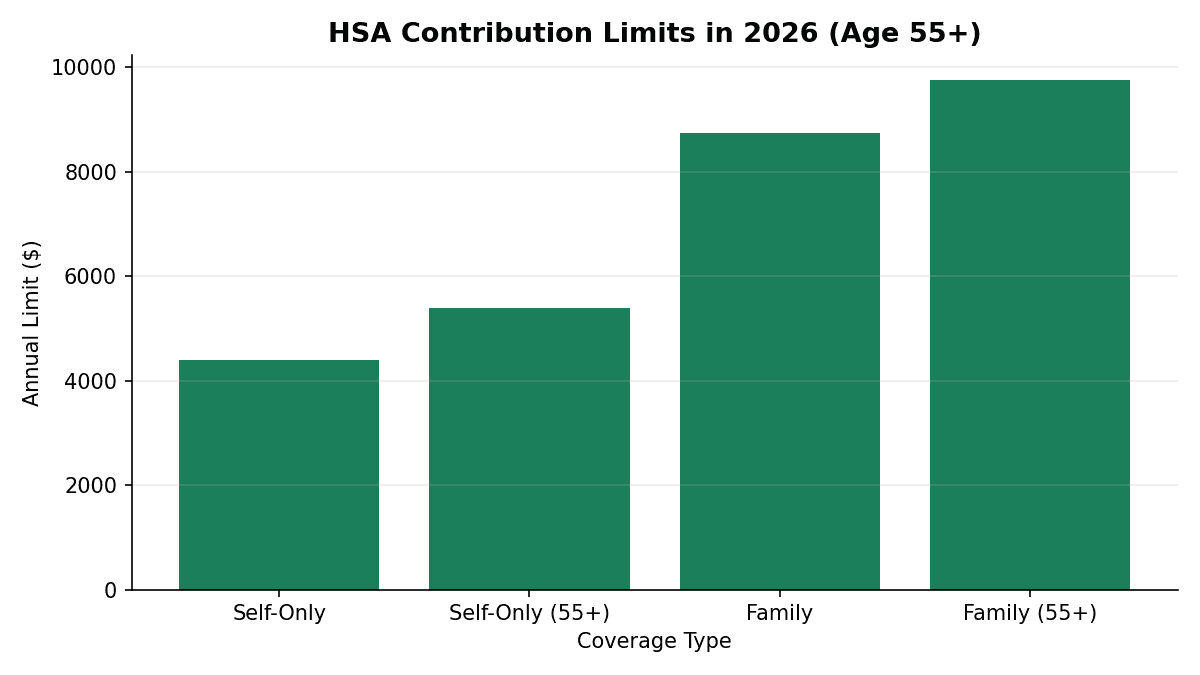
In 2026, the IRS contribution limit is $4,400 for self-only coverage and $8,750 for family coverage, with a $1,000 catch-up for those 55 and older who are not yet enrolled in Medicare. Before you retire, map out which expenses you’ll use HSA funds for. Our article on Retirement Health Savings Accounts (HSAs): A Dual Benefit walks through the strategy in detail.
8) Retiring and Relocating Without Checking Your Plan’s Coverage Area
What’s being missed
You’ve dreamed of retiring somewhere warmer or closer to grandkids. You submit your paperwork, start the move — and discover your FEHB plan’s network doesn’t extend to your new zip code.
Why it matters
Many FEHB plans are regional HMOs or have limited networks in certain states. If you move outside your plan’s service area, you may qualify for a mid-year plan change using a qualifying life event. But scrambling to find new coverage while settling into a new home is a completely preventable headache.
How to fix it
Before committing to a retirement location, check whether your current FEHB plan covers that area. OPM’s plan comparison tool filters by zip code — use it early. If you’re also thinking through where you want to live, our guide to Types of Senior Housing Explained is a useful starting point for the bigger picture.
9) Waiting Until the Last Minute to Review Coverage Before Your Retirement Date
What’s being missed
Retirement paperwork piles up. The final weeks get busy. FEHB review gets pushed to “I’ll deal with it later” — and later arrives faster than expected.
Why it matters
Your retirement effective date locks in your FEHB enrollment status. If you meant to switch plans during the last Open Season before retiring and missed the window, your options narrow sharply once you’re on the annuity rolls. Administrative errors in your retirement package are also far more likely when you’re rushing.
How to fix it
Build a personal FEHB pre-retirement checklist and start working through it at least 12 months before your target retirement date. Cover these items:
- Confirm your 5-year continuous FEHB coverage
- Review your current plan brochure for gaps
- Verify your provider network in your plan and any new location
- Check survivor benefit elections
- Attend any agency-sponsored retirement planning seminar your HR office offers
Don’t treat this as a one-week task. Treat it as a 12-month project.
Conclusion
FEHB is one of the most generous employer-sponsored health benefits in the country. You’ve earned it through years of service, and it can protect you and your family for decades to come.
But the window to get these decisions right is finite. Most elections made at or before retirement are difficult or impossible to reverse. The time to act is before you hand in your badge.
Work the list. Talk to your HR benefits officer. Consider a consultation with a fee-only advisor who specializes in federal retirement. The steps aren’t complicated — they just require intentionality.
Getting your coverage right also creates the foundation for everything else you want in retirement: the energy to stay active, the freedom to travel, and the ability to focus on living well rather than worrying about medical bills. Our piece on Anti-Aging and Longevity For Your Retirement is a great next read for thinking about the full picture.
You didn’t serve your whole career to leave your best benefit on the table. Get it right.