

Medicare is one of the most valuable benefits you’ve earned after decades of work.
But the enrollment process is riddled with trip wires.
Miss one deadline, skip one annual review, or misread one rule, and you could face penalties that follow you for life.
Most people don’t find out about these mistakes until after they’ve made them.
The good news: every single one of them is avoidable.
You don’t need to become a Medicare expert overnight. You just need to know where the landmines are.
In this article, you’ll learn 9 Medicare enrollment mistakes that cost retirees thousands, with clear steps to sidestep each one.
Because getting solid coverage shouldn’t require a law degree. It just requires knowing what to watch for.
1) Missing Your Initial Enrollment Window
What’s being missed
Your Initial Enrollment Period (IEP) is a 7-month window that opens three months before your 65th birthday month, includes your birthday month, and closes three months after. Per SSA guidance, if you’re not already receiving Social Security benefits, you must actively sign up. Millions of people assume enrollment is automatic. For most, it isn’t.
Why it matters
Miss this window and you’ll wait for the General Enrollment Period (January 1 to March 31), with coverage starting the month after you sign up. That’s months without coverage, plus a potential lifetime late enrollment penalty added permanently to your Part B premium.
How to fix it
- Mark your calendar 3 months before your 65th birthday.
- Visit medicare.gov to begin your application.
- Don’t wait for a notice in the mail. Set the reminder now.
2) Misunderstanding the Part B Late Enrollment Penalty
What’s being missed
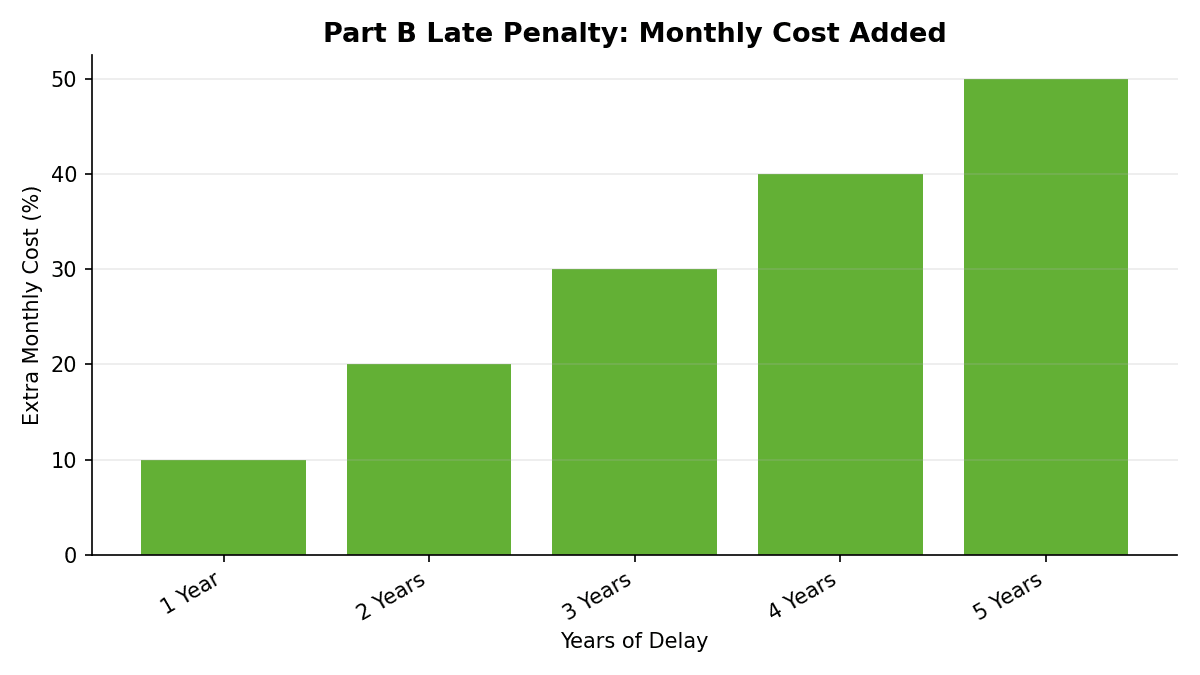
Many retirees believe the late enrollment penalty is a one-time fee. It isn’t. The Part B penalty is 10% of the standard premium for every 12-month period you delayed enrollment without qualifying coverage, and it’s added permanently to your monthly bill.
Why it matters
In 2026, the standard Part B premium is $202.90 per month. A two-year delay adds 20% to that number, every single month, for the rest of your life. Over a 20-year retirement, that compounds into a significant sum.
How to fix it
- Enroll on time unless you have qualifying employer coverage that explicitly allows delay.
- If you’re unsure whether your current coverage qualifies, call Medicare directly at 1-800-MEDICARE before your IEP closes.
3) Thinking Employer Coverage Always Lets You Skip Part B
What’s being missed
Working past 65 and covered by an employer plan? You may be able to delay Part B penalty-free. But employer size matters. If your employer has fewer than 20 employees, Medicare is your primary payer, not your employer plan. Delaying Part B in that situation leaves you with major coverage gaps.
Why it matters
Your employer plan may pay almost nothing if Medicare should have been primary. Bills you thought were covered can come back to you as your full responsibility. It’s one of the least-talked-about traps in the Medicare rulebook.
How to fix it
- Ask HR directly: Is Medicare primary or secondary for someone my age on this plan?
- Get the answer in writing.
- If Medicare is primary, enroll in Part B now. Our guide to Medicare for Beginners walks through exactly how this works.
4) Skipping Part D Because You Don’t Take Prescriptions
What’s being missed
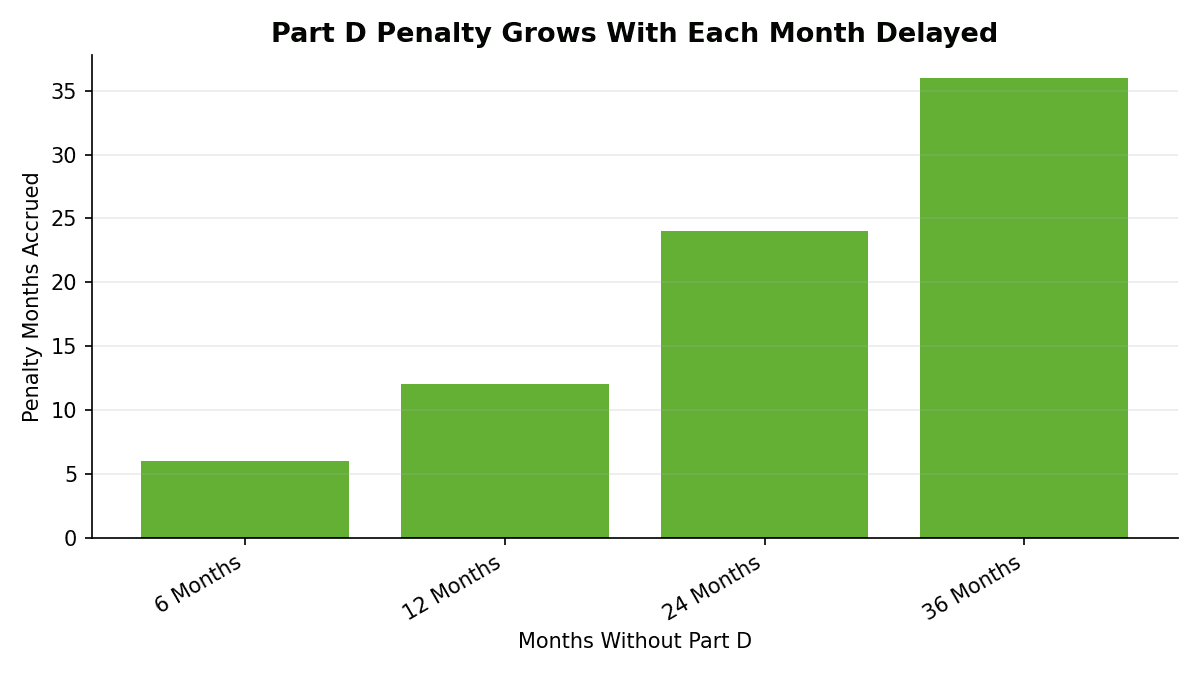
Part D covers prescription drugs, and the late enrollment penalty works the same way as Part B: 1% of the national base beneficiary premium for every month you delay without creditable drug coverage, added permanently to your premium.
Why it matters
You feel healthy today. But waiting until you need medications means enrolling late, paying a penalty, and potentially waiting months for coverage. Small per month, yes. But it compounds over years into real money.
How to fix it
- Enroll in a Part D plan during your IEP even if your current drug costs are minimal.
- A low-premium plan costs very little now and protects you from both the penalty and a future coverage gap.
- Think of it as locking in a low rate before your needs grow.
5) Ignoring Your Annual Notice of Change (ANOC)
What’s being missed
Every fall, Medicare Advantage and Part D plans send an Annual Notice of Change. It tells you exactly what’s shifting in your plan for the coming year: premiums, deductibles, formulary changes, and network updates.
Most people throw it away without reading it.
Why it matters
Your plan renews automatically every January 1. That sounds convenient…
What it really means is your drug coverage, out-of-pocket costs, or provider network could change dramatically with zero action from you.
Doctors get dropped. Drugs move to higher cost tiers.
How to fix it
- Read your ANOC every September when it arrives.
- Use the Open Enrollment Period (October 15 to December 7) to compare your plan against alternatives on medicare.gov.
- Switching takes about 15 minutes and can save hundreds of dollars per year.
6) Confusing Medicare Advantage with Original Medicare Plus a Supplement
What’s being missed
Medicare Advantage replaces Original Medicare. Medigap supplements it.
These are two very different approaches to covering costs beyond Original Medicare. Choosing one while expecting the benefits of the other is a common and expensive source of confusion.
Why it matters
Advantage plans often have lower premiums but rely on provider networks and prior authorizations. Medigap plans typically carry higher premiums but offer broader provider access and more predictable out-of-pocket costs. Neither is universally better. The right fit depends on your health, budget, and where you live.
How to fix it
- List your current doctors, regular prescriptions, and expected travel patterns before choosing.
- Compare both paths side by side. Our overview of federal health insurance options for retirees covers the key differences in plain language.
7) Missing Special Enrollment Period Triggers
What’s being missed
A Special Enrollment Period (SEP) lets you sign up for Medicare outside normal windows without a penalty. SEPs are triggered by specific life events: losing employer coverage, moving out of your plan’s service area, your plan leaving Medicare, or a Medicare error. Most people don’t know what qualifies.
Why it matters
If you lose job-based coverage and don’t know you have an 8-month SEP window to enroll in Part B, you could end up waiting for General Enrollment and paying a penalty on top of a coverage gap. The SEP exists specifically to protect you. But you have to use it.
How to fix it
- Any time your coverage situation changes, call Medicare or a free SHIP counselor (State Health Insurance Assistance Program) immediately.
- Ask directly whether your situation triggers an SEP. Don’t assume. The window can be short.
8) Not Checking Whether Your HSA Contributions Must Stop
What’s being missed
Enrolling in any part of Medicare makes you ineligible to keep contributing to a Health Savings Account. Many people enroll in Part A (often premium-free) without realizing it ends their HSA contributions. Some even enroll retroactively without planning for it.
Why it matters
Part A enrollment can be backdated up to 6 months if you delay past 65, which means contributions made during that lookback period could trigger IRS penalties. This catches a lot of late-career savers completely off guard.
How to fix it
- Stop HSA contributions at least 6 months before you intend to enroll in Medicare.
- Coordinate the timing carefully. Our deep dive on Health Savings Accounts in retirement explains exactly how to maximize what you’ve already saved.
9) Choosing a Plan Once and Never Looking Back
What’s being missed
Medicare isn’t a set-it-and-forget-it decision. Your health needs evolve. Plan formularies change. New options become available in your area. Yet most people stay in the same plan year after year, even when better options exist. Inertia is one of the most expensive retirement habits you can have.
Why it matters
Over a 20-year retirement, the difference between a well-matched plan and a poorly matched one can run to tens of thousands of dollars in premiums and out-of-pocket costs. A good fit today may be a poor one in three years.
How to fix it
- Build a 30-minute Medicare review into your calendar every October.
- Use medicare.gov’s Plan Finder tool with your actual prescriptions and doctors listed.
- Treat it the way you’d treat a portfolio review: routine, unemotional, and worth the time.
Getting this right year after year is also how you keep more money in your pocket for travel, experiences, and the activities that make retirement worth living. Your coverage decisions and your financial freedom are more connected than most people realize.
Conclusion
Medicare enrollment doesn’t have to be overwhelming. It just requires knowing the rules before the deadlines arrive.
Most of these mistakes have simple fixes: mark a calendar, read a document, make one phone call. The effort is small. The savings are real.
If you’re just getting your bearings, our Medicare for Beginners guide is a strong next step. It covers your full coverage landscape in plain language, without the jargon.
You’ve worked hard to get here. Your healthcare coverage should work just as hard for you.
Don’t let a missed deadline or an unread notice cost you what you’ve already earned.